
A monthly newsletter from the National Institutes of Health, part of the U.S. Department of Health and Human Services
NIH Websites Are Changing
NIH is moving the launch of its new website to the fall to ensure the best possible experience for everyone who relies on our websites for health information, research, funding opportunities, and other resources.
Getting a Grip on Gastroparesis
Understanding Slowed Digestion
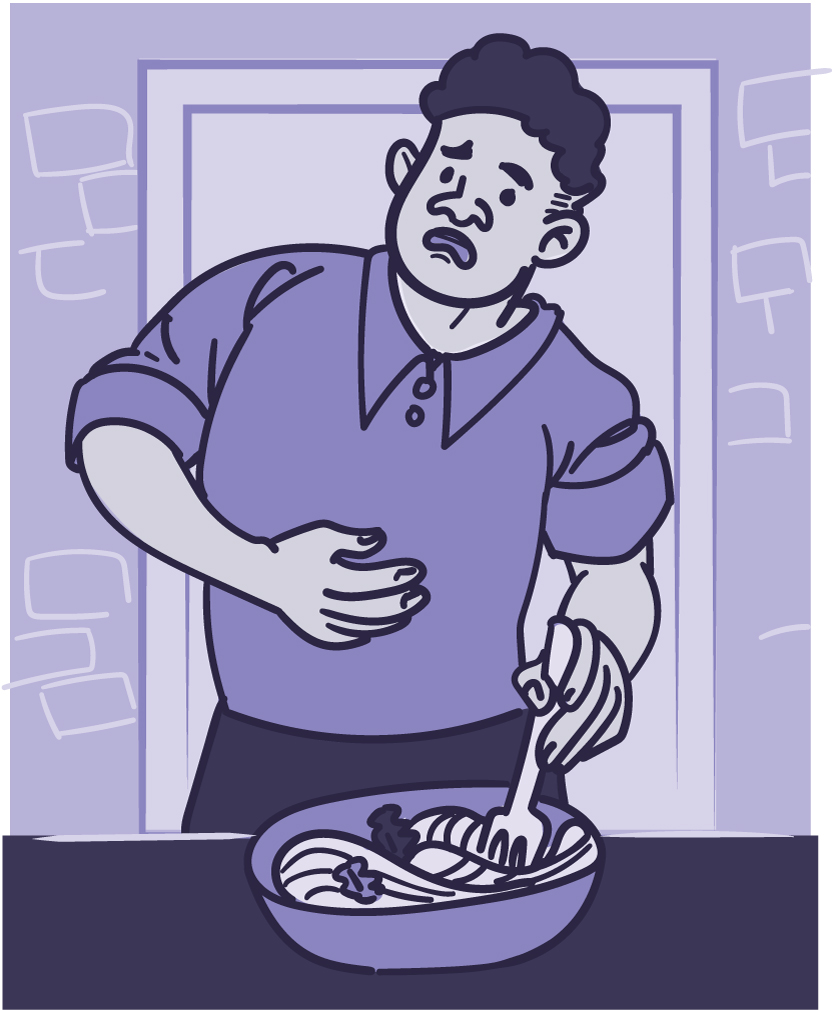
After you eat, your stomach breaks down the food before pushing it along. How long it takes for your stomach to empty depends on many factors. Meals that are big, fatty, or high in calories will empty more slowly, but it also depends on your health. Some people have a condition that makes food empty slower than it should. It’s called gastroparesis.
Gastroparesis isn’t common. But about 1 in 4 people have symptoms similar to those of people with gastroparesis. The only way to know if a person has gastroparesis is to measure how fast the stomach empties.
“Patients don’t come in telling you they have a gastric delay,” says Dr. Braden Kuo, chief of gastroenterology at Columbia University and New York Presbyterian. “They come with symptoms.”
Those symptoms may include nausea or vomiting, feeling full quickly, and belly pain or discomfort. To diagnose gastroparesis, doctors must rule out other causes, such as a blockage, ulcers, or inflammation, Kuo explains.
“When all those other tests come back negative and the patient still has complaints, then it raises the possibility of gastroparesis,” Kuo says.
Most cases of gastroparesis are idiopathic. That means they happen for unknown reasons. But certain conditions can damage the nerves involved in gut sensations or gut motility.
Uncontrolled diabetes is the most common known cause. High blood sugar can damage nerves, including the vagus nerve. The vagus nerve sends signals between the brain and gut that tell your stomach muscles to contract or relax. They also give you the feeling of fullness after a meal.
Certain autoimmune diseases and nerve damage from viral illnesses can slow digestion, too.
“Many people get sick during a viral illness with gastrointestinal upset and most people recover within a couple of days or a week,” Kuo says. “But some people never fully recover from nausea, vomiting, pain, or discomfort. So the virus somehow changed the nerve endings in the gut and how they function and sense things.”
To better understand and treat gastroparesis, NIH created the Gastroparesis Clinical Research Consortium (GpCRC). For the last 17 years, the GpCRC has enrolled adults and children with gastroparesis to learn more about the disorder and test ways of treating it.
One GpCRC study showed that 9 in 10 people with gastroparesis have abdominal pain. In about 1 in 3, the pain was severe to very severe. Other studies looked at how often people with gastroparesis end up in the emergency room.
Kuo, who is a member of the consortium, mentions studies of tissue samples capturing the whole stomach wall. “We’re really beginning to identify the changes at the cell level, in the nerve endings, and at the inflammatory level that are contributing to these patients’ conditions,” he says.
Researchers are tracking patients over time to see how their symptoms change. Kuo is studying the role of the gut-brain connection and whether a type of talk therapy, called cognitive behavioral therapy, may improve symptoms. This approach helps patients better understand their condition and its connection to the brain. It teaches techniques to relax the vagus nerve. Patients also learn to overcome the fears of eating that often come with gastroparesis. The trial is currently enrolling patients.
“We’re giving them tools they can control that can make a big difference in their clinical outcome,” Kuo says.


NIH Office of Communications and Public Liaison
Health and Science Publications Branch
Building 31, Room 5B52
Bethesda, MD 20892-2094
Contact Us:
[email protected]
Phone: 301-451-8224
Share Our Materials: Reprint our articles and illustrations in your own publication. Our material is not copyrighted. Please acknowledge NIH News in Health as the source and send us a copy.
For more consumer health news and information, visit health.nih.gov.
For wellness toolkits, visit www.nih.gov/wellnesstoolkits.