
A monthly newsletter from the National Institutes of Health, part of the U.S. Department of Health and Human Services
NIH Websites Are Changing
NIH is moving the launch of its new website to the fall to ensure the best possible experience for everyone who relies on our websites for health information, research, funding opportunities, and other resources.
Understanding Epilepsy
A Surge of Signals
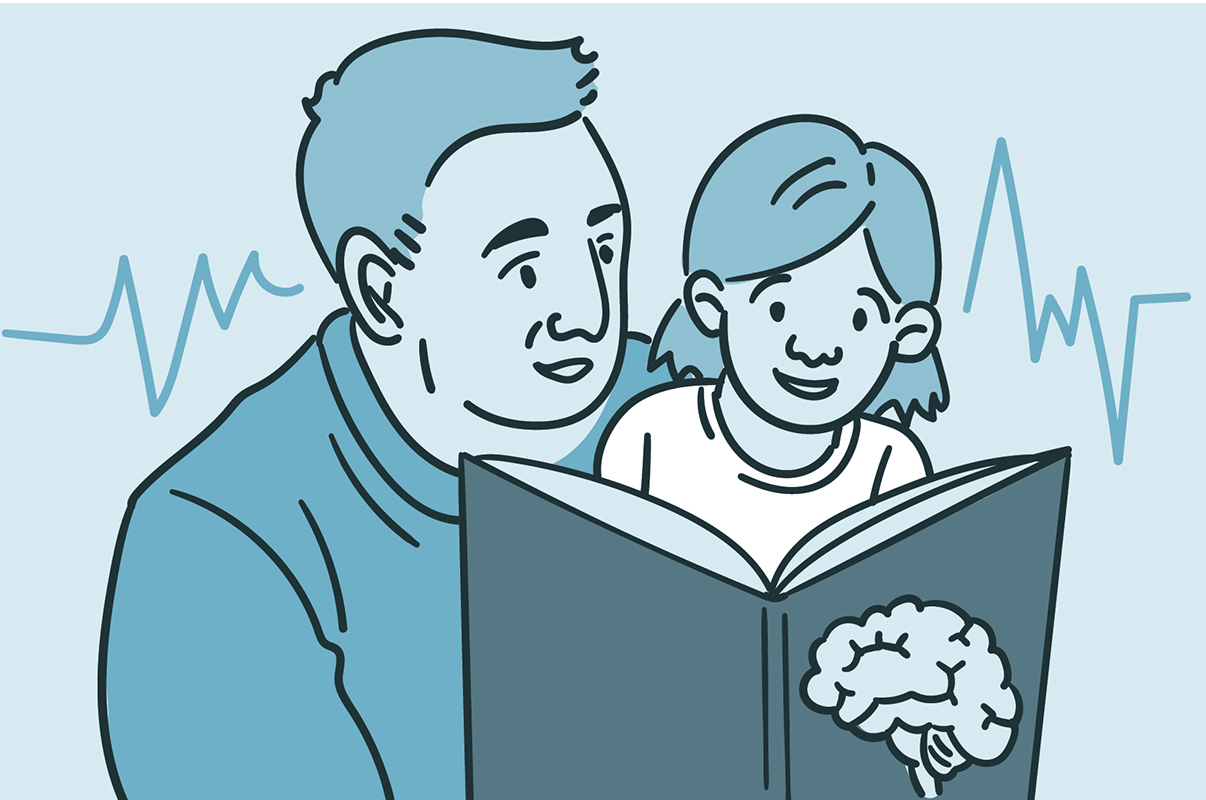
Your brain contains a complex network of nerve cells, called neurons, that send signals to the rest of your body. These signals allow you to sense the world around you, control your body’s movements, and experience emotions.
But sometimes things can go wrong. Groups of neurons may send abnormal bursts of signals all at once. This surge of brain activity is called a seizure.
Any seizure is a cause for concern. Epilepsy is a condition in which you have repeated seizures. But not all seizures mean you have epilepsy.
A seizure can cause strange sensations or feelings. You may experience uncontrollable movements or suddenly stare off into space.
These symptoms can be confusing. People who have them or see them may not realize they are signs of a seizure. The signs of a seizure depend on where signal surges happen.
Some people have a seizure only once or once in a while. But others have them regularly—even up to hundreds a day.
Scientists are still not sure what causes epilepsy in about one-half of people diagnosed with the disorder. NIH researchers are working to find better ways to diagnose and treat it.
Unraveling Symptoms
Anything that disturbs the pattern of normal brain activity can lead to seizures. Seizures may develop from illness, infections, damage or tumors in the brain, genetic factors, or problems during brain development.
There are two main types of seizures: generalized and focal. Generalized seizures start in both sides of the brain. Focal seizures start on one side but may spread to both sides. Some people have both types of seizures, with no clear pattern.
“People often get the wrong idea about generalized seizures from TV,” says Dr. Adam Hartman, an epilepsy specialist for children at NIH. “Usually someone is shown lying on the floor with all four limbs stiff or shaking. While that happens, other signs of generalized seizures are less obvious, like staring into space.”
During focal seizures, some people may be unaware of what’s happening. They may look confused or dazed, pick at their clothes, or smack their lips. They may be unable to answer questions or respond to directions for a few minutes.
People can lose consciousness in both types of seizures. When that happens, even briefly, they may fall or injure themselves. If seizures last longer than five minutes, seek medical care immediately. They can be life-threatening.
Children with delayed brain development and other developmental delays are more likely to have seizures. They’re also more likely to die suddenly. This is referred to as sudden unexpected death in epilepsy, or SUDEP.
Children who develop a rare type of epilepsy called Dravet syndrome are one example. Dr. Lori Isom, an epilepsy expert at the University of Michigan, is looking into why they are less likely to survive. Studies have shown that people with this condition have genetic mutations, or changes to their DNA sequence.
“These genetic mutations affect not only the brain but also the heart,” says Isom. “They can cause the heart to beat irregularly, as well as seizures.”
Isom’s team is trying to unravel how the brain and heart each contribute to SUDEP. In previous years, they helped develop a gene therapy to treat Dravet syndrome. Their gene therapy showed promise for improving seizures in an animal model they developed with NIH funding. Now, a private company is testing the treatment in children in a clinical trial.
Diagnosing Epilepsy
Epilepsy can develop at any age. But infants, children, and older adults are at the highest risk.
Diagnosing epilepsy involves a review of your medical history. You may have Related to the body’s nervous system, which is made up of the brain, spinal cord, and nerves throughout the body. neurological testing and blood tests done. Blood tests can check for infections or genetic conditions. Several measures of brain activity can also help with diagnosis. These include electroencephalograms, or EEGs, and brain imaging scans.
Epilepsy can sometimes be hard to diagnose. Adults with the most common focal epilepsy, which occurs in the temporal lobes, often go undiagnosed or misdiagnosed. The temporal lobes are located on either side of the brain. Brain tissue in the area can deteriorate from seizures over time and with repeated seizures.
Faint patterns of brain damage can appear on MRI scans. But these aren’t always visible to a A doctor who specializes in creating and analyzing images of the inside of the body. The pictures might be produced with X-rays, sound waves, or other types of energy. radiologist. Dr. Carrie McDonald, a scientist who specializes in imaging at the University of California, San Diego, is testing artificial intelligence (AI) to identify these brain patterns on MRI scans. Her group found that AI could correctly identify over 80% of individuals with temporal lobe epilepsy.
“Using AI to identify brain areas with specific patterns of damage will not only help radiologists but also surgeons,” McDonald explains. “Surgeons can use the information to help guide them with implanting electrodes in an individual’s brain. The electrodes monitor seizure activity and can help pinpoint the location of seizures.”
Combining this technique with other brain activity testing can help doctors locate where a person’s seizures are coming from. Understanding where seizures happen can help doctors choose the right treatment.
Getting Treatment
Doctors usually prescribe antiseizure drugs first to control seizures. But some people don’t respond to these drugs. They may need to see a nervous system specialist, called a neurologist, who focuses on epilepsy.
Dr. Sara Inati, an epilepsy specialist at NIH, is researching better ways to evaluate and treat people with drug-resistant epilepsy. They may have repeated seizures that can damage specific areas of the brain over time.
Inati’s recent study looked at brain scans of people with drug-resistant epilepsy. She analyzed scans with abnormal results. She found that the size of two brain areas, the hippocampus and the amygdala, often changed. These brain changes were not in the same place that seizures happened. And they differed depending on which side of the brain seizures were located.
“Brain changes can start in one part of the brain and cause damage in other parts that doctors may not know about,” says Inati. “Having this information can help them adjust their treatment plan.”
Other treatment options can include surgery or implanted devices. These devices send electrical impulses to the brain. Some people may also benefit from changes to their diet.
Learning to live with epilepsy can be challenging. But many people do well with treatment and live a full life.




NIH Office of Communications and Public Liaison
Health and Science Publications Branch
Building 31, Room 5B52
Bethesda, MD 20892-2094
Contact Us:
[email protected]
Phone: 301-451-8224
Share Our Materials: Reprint our articles and illustrations in your own publication. Our material is not copyrighted. Please acknowledge NIH News in Health as the source and send us a copy.
For more consumer health news and information, visit health.nih.gov.
For wellness toolkits, visit www.nih.gov/wellnesstoolkits.