
A monthly newsletter from the National Institutes of Health, part of the U.S. Department of Health and Human Services
NIH Websites Are Changing
NIH is moving the launch of its new website to the fall to ensure the best possible experience for everyone who relies on our websites for health information, research, funding opportunities, and other resources.
Handling a Hernia
When Something Slips Out of Place
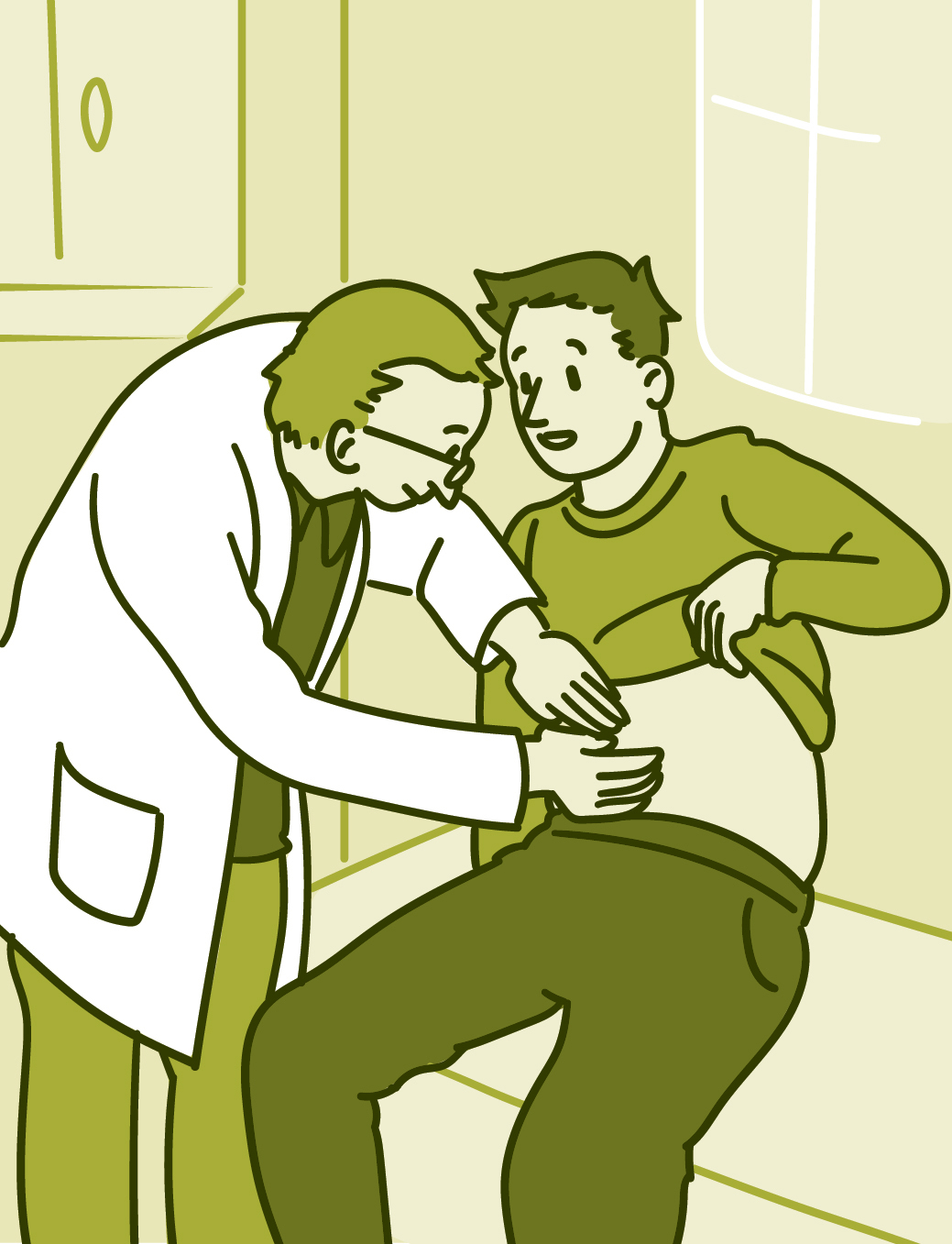
Everything in your body has its proper place. Muscles and other internal structures help keep your organs where they should be. But sometimes they’re not strong enough to do that. In that case, a piece of tissue or organ can slip through a gap in the weakened structures around it. The result is a condition called a hernia.
Most hernias occur in the abdomen. But they can happen in other places, like your groin or upper thigh.
Inguinal hernias are the most common type. These occur in the lower abdomen, just above the groin. Another type is an umbilical hernia, which happens near your belly button.
Hernia symptoms depend on where they happen and the organ involved. Often, the first sign is a bulge. Some hernias are painful, but not all. Some cause odd sensations or discomfort.
“You would be surprised how, just in the course of everyday life, hernia symptoms can affect someone,” says Dr. John Fischer, a surgeon at the University of Pennsylvania. “A hernia can affect activities of daily living and how much you can get done in a day. It can affect sleep. It can affect your psychological well-being, your feelings about how you look, and your ability to interact socially.”
Doctors can often diagnose a hernia with a physical exam. But in rare cases your doctor may not be able to see or feel the bulge a hernia causes. So they may need to order medical imaging, like an ultrasound.
Hernias aren’t usually life-threatening. But in rare cases, a hernia can become an emergency if it becomes “strangulated.” That means the part of the organ causing the hernia has had its blood supply cut off by the squeezing of the muscles around it. Strangulated hernias can cause severe pain, nausea, or vomiting.
A hernia may not need treatment if it isn’t causing symptoms. Your doctor might instead monitor it to make sure it doesn’t get worse. If a hernia is causing problems, surgery is the only permanent solution. But even after surgery, the same organ may slip out of place again.
Many types of surgery increase the risk for a new hernia. Cutting into the internal structures that hold organs in place can weaken those structures. Organs can then more easily push through the weakened area. The result is called an incisional hernia.
Incisional hernias are more likely to occur in people who smoke or have diabetes. These conditions can make the body heal more slowly after surgery. Slower healing causes the weakness in an area to last longer, increasing the risk for a hernia.
Fischer’s NIH-funded research is looking at ways to reduce the chance of someone getting an incisional hernia after surgery. His team hopes to create a mobile app to assess a patient’s risk for an incisional hernia. An app-based assessment could help doctors tailor patient conversations.
“It’s important to understand what kinds of activities you can do after an operation,” Fischer says.
But many factors other than surgery can make a hernia more likely to happen. See the Wise Choices box to learn what puts you at higher risk.


NIH Office of Communications and Public Liaison
Health and Science Publications Branch
Building 31, Room 5B52
Bethesda, MD 20892-2094
Contact Us:
[email protected]
Phone: 301-451-8224
Share Our Materials: Reprint our articles and illustrations in your own publication. Our material is not copyrighted. Please acknowledge NIH News in Health as the source and send us a copy.
For more consumer health news and information, visit health.nih.gov.
For wellness toolkits, visit www.nih.gov/wellnesstoolkits.