
A monthly newsletter from the National Institutes of Health, part of the U.S. Department of Health and Human Services
NIH Websites Are Changing
NIH is moving the launch of its new website to the fall to ensure the best possible experience for everyone who relies on our websites for health information, research, funding opportunities, and other resources.
Watch Out for Wildfire Smoke
Staying Safe With a Fire Nearby
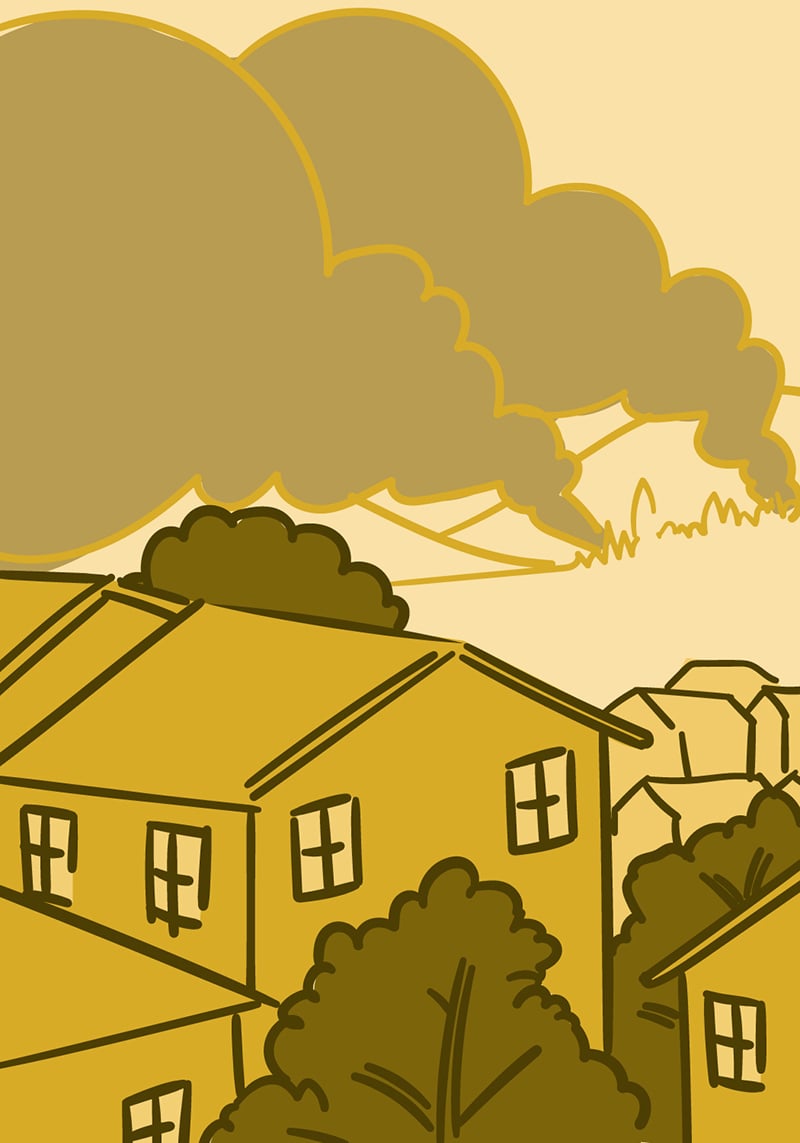
Wildfires can be sparked by human activity or natural events. Over the past few decades, they have become increasingly common. The flames can destroy buildings and endanger people in the immediate vicinity.
But wildfires can harm people even if no one is nearby. This is mainly because of the smoke they create.
“We sometimes see smoke in the air hundreds of miles away from a wildfire,” says Dr. Aubrey Miller, an NIH expert on environmental disasters. NIH-funded researchers are looking for ways to keep people safer when these natural disasters strike.
Smoke contains tiny pieces of material, called particulate matter. Particulate matter can irritate your eyes, nose, and throat. Some particulate matter is small enough to move deep into your lungs when you inhale it. This can damage the lungs and make it more difficult to breathe, especially for people who already have heart or lung problems.
Inhaled particulate matter can also end up in your blood. Blood travels all around your body, to every organ. So breathing in wildfire smoke can increase the risk for serious health problems, like a heart attack or stroke.
When wildfire flames reach a town or city, they start to burn streets, buildings, furniture, and other manufactured materials. “Think about what’s burning: plastics, heavy metals, arsenic,” Miller says. “These can cause a whole series of other hazards for the community.”
Wildfires can raise your risk for health problems that happen long after the smoke is gone, too. For example, exposure to polluted air may increase the risk of developing cancer and brain diseases, like Alzheimer’s disease and other dementias. Some studies suggest that pregnant women exposed to wildfire smoke may be more likely to give birth early or have a baby with a low birth weight. Both can affect a baby’s health and development. Researchers are continuing to study the possible effects on pregnant women and children.
Wildfires can also affect your mental health. Living through a natural disaster increases your risk for anxiety, depression, and post-traumatic stress disorder (PTSD).
Researchers are looking for better ways to measure and counter wildfires’ health effects. They’re also starting to collect data more quickly after a fire begins to better understand the exposures and health impacts. This will help them determine when certain actions would be most helpful to reduce the fire’s immediate and long-term consequences.
Scientists are also looking at what happens when multiple extreme weather events happen at the same time.
“Often we have a heat wave on top of the wildfire, and that might have compounding effects,” Miller says. “We’re trying to understand what happens when these sorts of things come together.”
The health effects of wildfires are wide-ranging. But there are ways you can protect yourself and your loved ones. See the Wise Choices box for tips.

NIH Office of Communications and Public Liaison
Health and Science Publications Branch
Building 31, Room 5B52
Bethesda, MD 20892-2094
Contact Us:
[email protected]
Phone: 301-451-8224
Share Our Materials: Reprint our articles and illustrations in your own publication. Our material is not copyrighted. Please acknowledge NIH News in Health as the source and send us a copy.
For more consumer health news and information, visit health.nih.gov.
For wellness toolkits, visit www.nih.gov/wellnesstoolkits.