
A monthly newsletter from the National Institutes of Health, part of the U.S. Department of Health and Human Services
NIH Websites Are Changing
NIH is moving the launch of its new website to the fall to ensure the best possible experience for everyone who relies on our websites for health information, research, funding opportunities, and other resources.
Navigating Puberty
A Time of Changes and Challenges
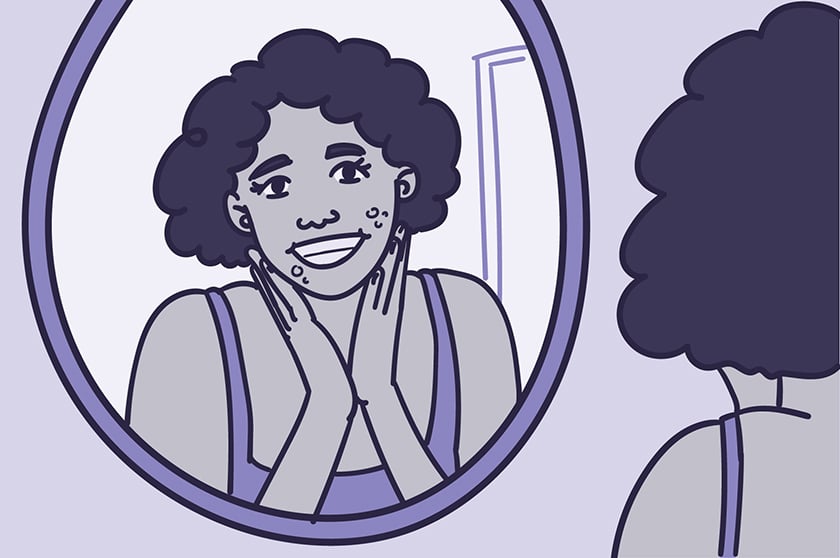
Puberty is a normal, natural part of growing up. It’s also a time of huge change, when children’s bodies mature. With
Substances produced in one part of the body to signal another part to react a certain way.
hormones surging, early adolescents may have mood, energy, and sleep changes. They may feel self-conscious about how they look.
Everyone matures physically at their own pace. While there is a normal age range of 8 to 13 for girls and 9 to 14 for boys, some children may start developing earlier or later.
Parents can help their children navigate puberty by being available and supportive, says Dr. Jennifer Pfeifer, a developmental psychologist at the University of Oregon.
“Talking positively about how our bodies and minds change during puberty can reassure young people that this is normal,” Pfeifer says. “It can also open the lines of communication.”
Children who go through puberty early may develop health problems. NIH researchers are looking into what contributes to early-onset puberty, so they can better understand how to prevent it.
How Puberty Starts
Puberty kicks off in the brain. A small part of the brain called the hypothalamus releases a hormone that tells the pituitary gland (a tiny organ connected to the hypothalamus) to release other hormones.
These hormones signal the ovaries to release estrogen in females and the testicles to release testosterone in males. Together, this reproductive network is called the hypothalamic-pituitary-gonadal (HPG) axis.
Meanwhile, the small organs that lie above the kidneys, called adrenal glands, also release steroid hormones that trigger physical changes.
Parents can usually tell when their children are starting puberty. Both girls and boys will develop pubic and armpit hair and sweat more, which can create acne and body odor.
Girls start to develop breasts, which can happen a few years before their period begins. In boys, their genitals start to grow, and their testicles and penises get bigger. They may also start to have wet dreams at night. This is when they release semen while they are asleep. Boys also begin to develop muscle mass, their shoulders broaden, and their voices deepen.
Growth spurts are a typical part of puberty. Girls tend to reach their full height by their early teens. Boys reach that milestone a few years later.
The brain develops rapidly during puberty. Changes to brain regions that handle social behavior can lead teens to focus more on peer relationships and social experiences.
How adolescents view themselves during puberty also matters, says Pfeifer. “Girls, especially, see that their bodies are changing and are aware that others see that too. That affects how they feel about themselves,” she explains.
Pfeifer has been studying how puberty affects mental health. She’s found that depressive symptoms increase in teenage girls. These symptoms include feeling less happy and more lonely, being easily irritated, not eating as much, and showing signs of social withdrawal. Signs of social withdrawal can include pulling away from friends and family due to loss of interest or energy to connect.
Puberty Timing
In some children, puberty starts earlier than others. This is called early (or precocious) puberty. The signs of early puberty are that girls’ breasts may start to develop before age 8, and their periods may begin before age 10. Boys’ genitals may start to grow before age 9.
Early puberty can increase the risk of type 2 diabetes and heart disease. Girls are more likely to develop depression and anxiety when they start puberty early. They also have increased chances of developing breast cancer later in life.
Some studies suggest that boys may also be at increased risk for anxiety and depression when they start puberty early. But more research is still needed to understand how early puberty affects boys’ mental health.
Children who start and finish puberty earlier than normal may also not reach their full height potential.
Given the risks related to early puberty, especially in girls, their doctor may recommend medications that can stop the release of sex hormones until the normal age.
What Influences Puberty
The timing of puberty is influenced by many things, including your genetic make-up and your environment.
NIH-funded researchers have been identifying specific gene changes, called mutations, that can trigger early puberty.
MKRN3 mutations are considered the most common known genetic cause of early puberty. The mutations tend to run in families.
The MKRN3 gene provides instructions for making the MKRN3 protein. This protein plays a role in directing the onset of puberty. Normally, the MKRN3 protein puts the brake on activating puberty until the normal age range. But when the gene is mutated, the protein stops working normally. That causes the brake to be released and puberty to start earlier.
“We’re trying to understand how the MKRN3 protein works, so we can better prevent early puberty,” says Dr. Ursula Kaiser, who specializes in treating hormone disorders at Brigham and Women’s Hospital. “If we can identify people with a higher risk of early puberty through genetic screening of MKRN3 mutations, we can start treatment earlier.”
Environmental factors can also affect the timing of puberty. “Stress can speed up or delay puberty depending on the type, severity, and timing,” says Dr. Natalie Shaw, an NIH expert on hormones in children and adolescents.
Being overweight or obese in childhood can contribute to early puberty. Extra body fat can cause hormonal changes that can prompt puberty to start earlier.
Certain chemicals may interfere with the body’s hormones and lead to early puberty. Shaw and other researchers searched through thousands of chemicals for ones that might activate hormones. They found that a fragrance ingredient called musk ambrette had noticeable effects on zebrafish. Musk ambrette is commonly used in perfumes, lotions, soap, and detergent.
“More research is needed to confirm our findings,” says Shaw. “But this raises the possibility that exposure could activate the reproductive axis early in children.”
Researchers are continuing to search for ways to identify and prevent early puberty. If you think your child is starting puberty earlier than normal, talk with your child’s doctor about the options.
Puberty is an exciting and often challenging time for teens and their parents. There are many ways parents can support their child during this period. See the Wise Choices box for tips.


NIH Office of Communications and Public Liaison
Health and Science Publications Branch
Building 31, Room 5B52
Bethesda, MD 20892-2094
Contact Us:
[email protected]
Phone: 301-451-8224
Share Our Materials: Reprint our articles and illustrations in your own publication. Our material is not copyrighted. Please acknowledge NIH News in Health as the source and send us a copy.
For more consumer health news and information, visit health.nih.gov.
For wellness toolkits, visit www.nih.gov/wellnesstoolkits.