
A monthly newsletter from the National Institutes of Health, part of the U.S. Department of Health and Human Services
NIH Websites Are Changing
NIH is moving the launch of its new website to the fall to ensure the best possible experience for everyone who relies on our websites for health information, research, funding opportunities, and other resources.
Health Capsule
Skin Cancer Genes May Raise Risk for Other Cancers
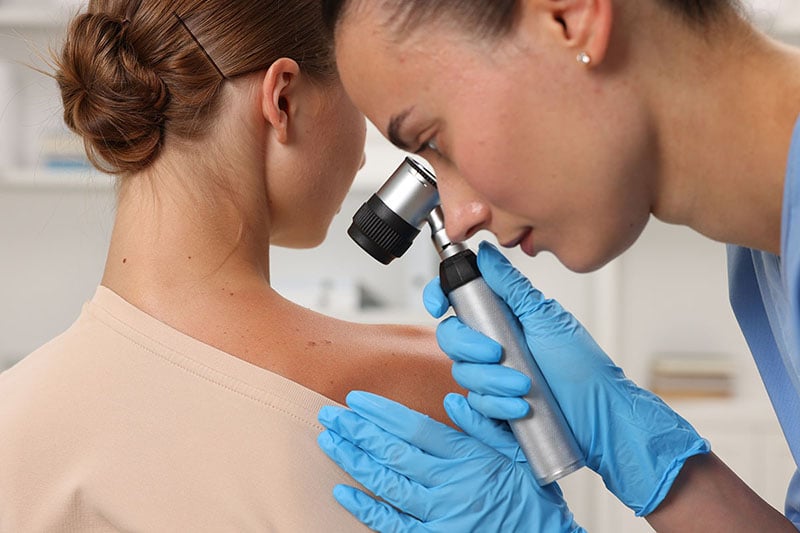
Melanoma is the deadliest form of skin cancer. A recent study found that some people diagnosed with melanoma were more likely to have mutations (or changes) in certain genes. The changes they found were also linked to a higher risk for other types of cancer.
An NIH-funded research team looked at data from two large studies. One took place in the U.S. and the other in the United Kingdom. Both studies included healthy people and those with melanoma. The team analyzed the health records of nearly 700,000 people.
The researchers focused on eight genes known to increase the risk of melanoma. Mutations in these genes weren’t common in healthy participants. They appeared more often in those with melanoma. People younger than age 40 with a single melanoma were more likely to have one of the gene mutations. So were those with multiple melanomas.
The team found some genes were also linked to other types of cancer. People with certain gene changes showed an increased risk for prostate cancer, breast cancer, or myeloma.
“If someone with melanoma has one of these mutations, other tissues may face an elevated cancer risk,” says NIH’s Dr. Michael Sargen, who led the study.
More research is needed to verify that gene changes are linked to other types of cancer. If they are, gene testing may help some patients and their family members better understand their risk for other cancers.




NIH Office of Communications and Public Liaison
Health and Science Publications Branch
Building 31, Room 5B52
Bethesda, MD 20892-2094
Contact Us:
[email protected]
Phone: 301-451-8224
Share Our Materials: Reprint our articles and illustrations in your own publication. Our material is not copyrighted. Please acknowledge NIH News in Health as the source and send us a copy.
For more consumer health news and information, visit health.nih.gov.
For wellness toolkits, visit www.nih.gov/wellnesstoolkits.