
A monthly newsletter from the National Institutes of Health, part of the U.S. Department of Health and Human Services
NIH Websites Are Changing
NIH is moving the launch of its new website to the fall to ensure the best possible experience for everyone who relies on our websites for health information, research, funding opportunities, and other resources.
Health Capsule
DASH-Style Diet Helps Control Blood Sugar
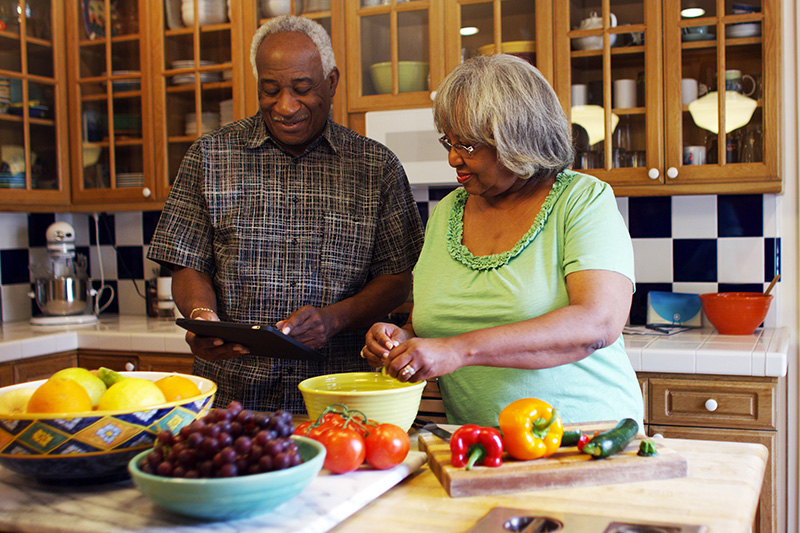
For over 30 years, doctors have recommended the DASH diet to help people reduce high blood pressure. Studies have repeatedly shown that the DASH eating plan can improve heart health. The DASH diet seems to have other health benefits. But its effects on blood glucose, also called blood sugar, in people with type 2 diabetes were unclear.
The DASH diet encourages eating fruits, vegetables, whole grains, and low-fat dairy. It favors beans and lean meats for protein. It suggests limiting saturated fats and sugar-sweetened food and drinks.
In a new study, researchers tweaked the DASH diet to help improve glucose control. The adjusted diet for diabetes is called DASH4D. It includes slight changes, such as eating even fewer sweets and starchy foods like potatoes.
Researchers studied 89 people with type 2 diabetes. Participants followed four different diets, in random order, for five weeks each. Two of the diets were variations on DASH4D. The other two were similar to the typical American adult diet.
Compared to a typical diet, the DASH4D eating plan led to more time with blood glucose in the recommended range. The results suggest that a modified DASH diet could help control blood sugar levels in adults with type 2 diabetes.
“The original DASH diet has long been recommended for people with diabetes and other health conditions due to its effectiveness in lowering blood pressure,” says Dr. Elizabeth Selvin at Johns Hopkins University. “But this is the first time a controlled study has shown a significant improvement in glucose control as well.”


NIH Office of Communications and Public Liaison
Health and Science Publications Branch
Building 31, Room 5B52
Bethesda, MD 20892-2094
Contact Us:
[email protected]
Phone: 301-451-8224
Share Our Materials: Reprint our articles and illustrations in your own publication. Our material is not copyrighted. Please acknowledge NIH News in Health as the source and send us a copy.
For more consumer health news and information, visit health.nih.gov.
For wellness toolkits, visit www.nih.gov/wellnesstoolkits.