
A monthly newsletter from the National Institutes of Health, part of the U.S. Department of Health and Human Services
NIH Websites Are Changing
NIH is moving the launch of its new website to the fall to ensure the best possible experience for everyone who relies on our websites for health information, research, funding opportunities, and other resources.
Health Capsule
Certain Medications Riskier for People With Dementia
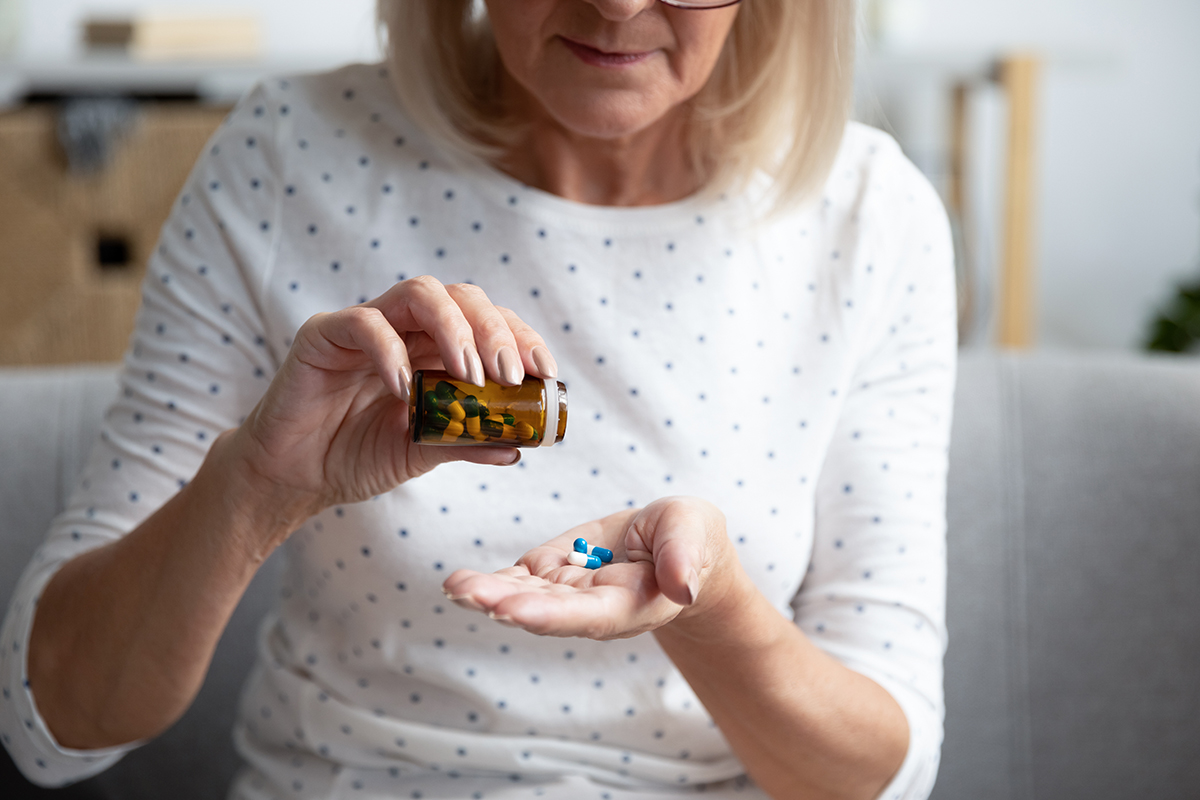
Some medications affect your brain and nervous system. Side effects can include an increased risk of confusion, falls, and hospitalization. This risk is higher for people with dementia—a brain disorder that causes memory loss and difficulty thinking clearly. A new study showed that many people with dementia are taking medicines that may not be safe for them.
Researchers studied medical records of about 4,800 people aged 65 and older. They looked at how many people took at least one medicine that can affect the brain and nervous system for at least 28 days.
The medicines included certain drugs that treat depression, anxiety or panic attacks, and sleeping problems. They also looked at some drugs that cause drowsiness. The researchers wanted to understand who was taking these drugs and why.
In people with dementia, 25% took at least one of these medicines. Only 17% of people without dementia took one of these medications.
The findings show that many older adults may be taking medications that might not be safe for them. Many did not have a medical reason to use them. Lowering the use of these medications could lead to better, safer care.
But prescriptions that affect the brain and nervous system may sometimes be needed.
“It is important for older patients and their caregivers to work closely with their physicians to ensure that these medications are appropriate to their cases,” says Dr. Annie Yang of Yale University.

NIH Office of Communications and Public Liaison
Health and Science Publications Branch
Building 31, Room 5B52
Bethesda, MD 20892-2094
Contact Us:
[email protected]
Phone: 301-451-8224
Share Our Materials: Reprint our articles and illustrations in your own publication. Our material is not copyrighted. Please acknowledge NIH News in Health as the source and send us a copy.
For more consumer health news and information, visit health.nih.gov.
For wellness toolkits, visit www.nih.gov/wellnesstoolkits.