
A monthly newsletter from the National Institutes of Health, part of the U.S. Department of Health and Human Services
NIH Websites Are Changing
NIH is moving the launch of its new website to the fall to ensure the best possible experience for everyone who relies on our websites for health information, research, funding opportunities, and other resources.
Chronic Pain Treatment
The Search for New Options
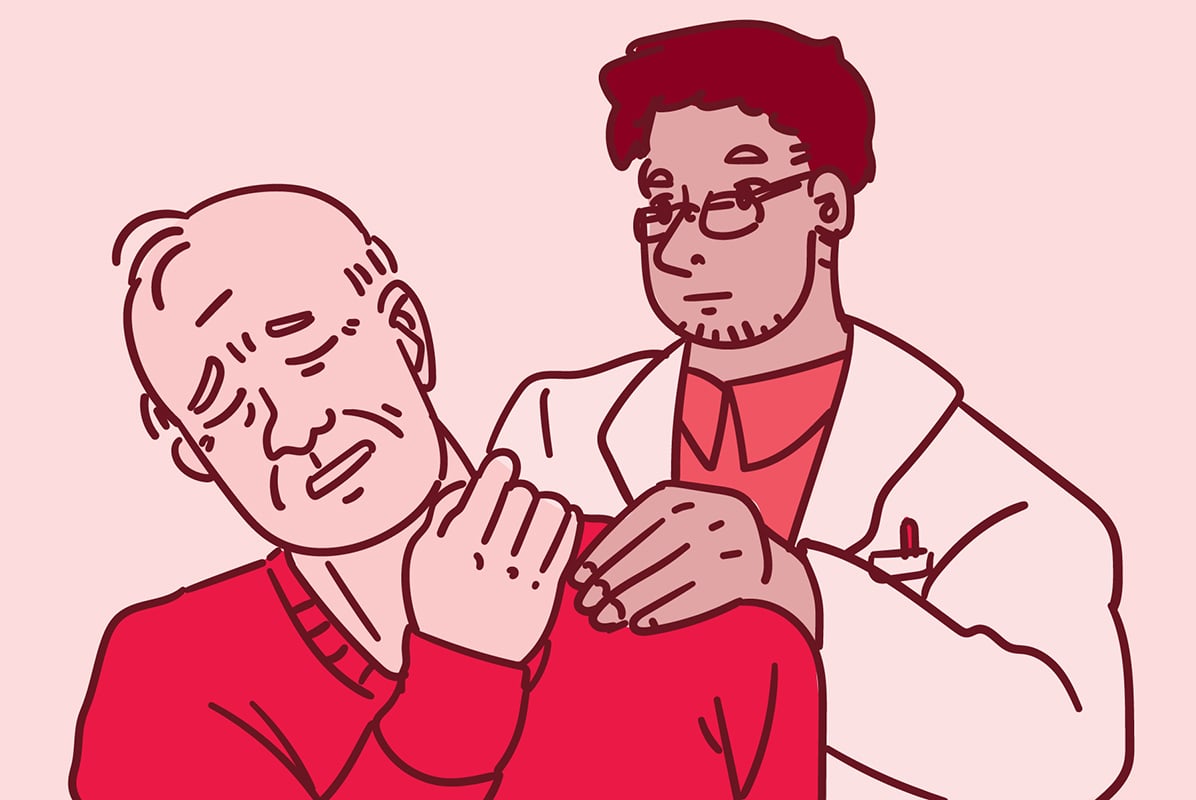
Pain can affect people in different ways. It can feel sharp or dull or like a prick, tingle, sting, burn, or ache. You may feel it in one area of your body or all over. Pain can be short-lived or go on for months or years.
Pain that lasts longer than three months is called chronic pain. Chronic pain can affect all aspects of daily life, including your mood, sleep, work, and relationships. And millions of Americans experience it.
Finding what works best to ease your chronic pain is a process. Treatments may include pain medications, medical procedures, devices, and physical therapy. Some people use complementary health options alongside conventional care. These may include acupuncture, yoga, chiropractic care, massage therapy, or tai chi.
But what’s available doesn’t always work for everyone. Sometimes, treatments may not get rid of pain, but they can still reduce pain and help people function better. Some pain medications have unwanted side effects. Others may lead to addiction.
Researchers are continuing to explore new ways to treat chronic pain. They’re looking for safer medications and more targeted therapies.
Developing Safer Medications
One class of drugs often used to treat pain is called opioids. Opioid drugs can lessen the feeling of pain in one part of the body or throughout the body. However, they can also cause serious side effects, including overdose and death. The risk is greater when opioids are misused or taken in ways other than prescribed. They can also lead to addiction for some people. Because these risks are widely recognized, opioid prescriptions have been declining in recent years.
“Doctors are less inclined to prescribe opioids for good reasons, but that means that some patients’ pain isn’t effectively treated,” says Dr. Steven Olson, a medicinal chemist at Sanford Burnham Presbys.
Olson and other researchers are trying to develop non-opioid drugs to relieve pain. “Our goal is to find an effective non-opioid drug that people can rely on and not be a danger to them,” Olson says.
Opioid pain relievers work by attaching to proteins called opioid receptors. Opioid receptors belong to a protein family called G protein-coupled receptors. When activated, they trigger signals inside cells that cause different effects in the body. These effects include pain relief.
Researchers have found that other types of G protein-coupled receptors can also bring pain relief. One example is neurotensin receptor 1. It’s activated by a molecule called neurotensin. But drugs that mimic neurotensin can also cause unwanted side effects. These include severe drops in body temperature and high blood pressure.
Olson and his team have discovered two molecules that can fine-tune the receptor’s response. These molecules stimulate the pain-relieving effects while reducing unwanted side effects. The team is now designing and making hundreds of new molecules to find more that can do both.
“We’re trying to develop the next generation of neurotensin receptor 1 drug molecules,” he says. Olson hopes to find molecules that they can develop into a new pain-relieving drug.
Targeted Pain Relief
Scientists are also testing a different approach to pain relief: gene therapy. Gene therapy delivers healthy genes into cells or fixes damaged genes in cells.
Dr. William Renthal is a neurology expert at Brigham and Women’s Hospital and Harvard Medical School. His team is developing new strategies to deliver gene therapies to specific nerve cells involved in pain.
Renthal’s team first created a cellular map of all the nerve cells in structures along the spine called the dorsal root ganglia. These contain nerve cells that carry sensory information from the body to the spinal cord. Some carry information about temperature or touch. Others carry pain signals from an injury or tissue damage. Those that carry pain signals are called nociceptors.
“We’ve used these maps to identify unique features about nociceptors,” Renthal explains. Those features help researchers design gene therapies that focus on the nerve cells that send pain signals. The goal is to avoid affecting nerves that control other sensations, such as touch.
“We want to be able to turn off the pain-transmitting signals without affecting the other cells in your body,” Renthal adds. Sending treatment only to pain-sensing nerve cells may help avoid unwanted side effects.
Complementary Health Options
Scientists are also looking beyond medicines for managing pain. Research has shown that certain complementary health approaches reduce pain for some people. These include acupuncture, massage therapy, tai chi, and others.
A recent study showed that nearly 1 out of every 2 people use complementary approaches for pain. Researchers are studying several complementary approaches for different types of pain.
Acupuncture is one example. It uses thin needles that are inserted through the skin into specific points on the body. The practice has been part of traditional Chinese medicine for centuries. One condition that acupuncture is being studied for as a form of pain relief is angina. Angina is a type of chest pain brought on by physical exertion or mental or emotional stress.
Researchers are looking at other complementary approaches to reduce pain caused by cancer treatment. Chemotherapy can damage nerves in the hands and feet. This leads to pain, numbness, tingling, loss of balance, and falls. Studies have shown that tai chi can improve balance and help lower the risk of falls. Tai chi involves slow, gentle movements and controlled breathing. Yoga also combines physical poses, breathing techniques, and meditation. Both approaches are being tested to help ease nerve pain from chemotherapy.
Pain often needs to be treated with a range of strategies because it affects the body in so many ways. At NIH’s chronic pain clinic, patients are evaluated and treated by a team of specialists.
“When patients come to the clinic, they’re seen by the entire team, including neurologists, nutritionists, psychologists, social workers, physical therapists, and rehabilitation medicine specialists,” says NIH’s Dr. Miroslav Bačkonja, an expert on pain treatment. “Our approach to assessing and treating chronic pain is to take a whole-person perspective.”
Complementary health options are part of this whole-person approach. For example, Bačkonja explains, “A patient might see a recreational therapist and get recommendations to learn tai chi, yoga, boxing, or dancing to improve their symptoms and function.” People with chronic pain may see a nutritionist to discuss changes to their diet or herbal options, in addition to other specialists on the team.
“We know there’s more to chronic pain than a single disease, joint, or incident,” he adds. Researchers are continuing to look for new options to help manage pain. If you’re dealing with chronic pain, talk with your doctor about treatment options. The options will differ depending on what’s causing the pain. Often, there are non-opioid treatment options that can improve your pain relief and quality of life now.



NIH Office of Communications and Public Liaison
Health and Science Publications Branch
Building 31, Room 5B52
Bethesda, MD 20892-2094
Contact Us:
[email protected]
Phone: 301-451-8224
Share Our Materials: Reprint our articles and illustrations in your own publication. Our material is not copyrighted. Please acknowledge NIH News in Health as the source and send us a copy.
For more consumer health news and information, visit health.nih.gov.
For wellness toolkits, visit www.nih.gov/wellnesstoolkits.