
A monthly newsletter from the National Institutes of Health, part of the U.S. Department of Health and Human Services
NIH Websites Are Changing
NIH is moving the launch of its new website to the fall to ensure the best possible experience for everyone who relies on our websites for health information, research, funding opportunities, and other resources.
Health Capsule
A Link Between Depression and the Brain’s Memory Center?
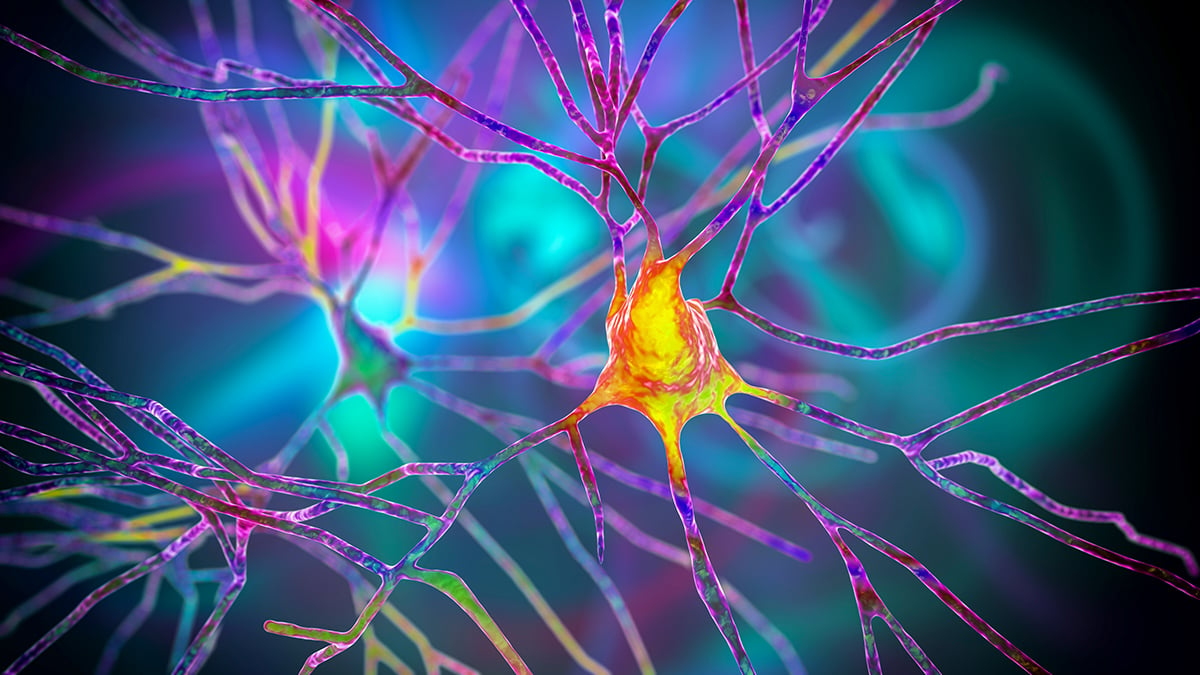
Depression is one of the most common mental health conditions in the country. People with depression tend to focus on negative memories and information. A team of NIH-funded researchers wanted to learn more about why.
The team focused its studies on the hippocampus. This brain area is vital for forming memories. Inside the brain are billions of brain cells called neurons. Neurons send messages to your body for everything that you do: breathe, talk, eat, walk, think, and more. The hippocampus is one of a few parts of the brain that keeps making new neurons throughout a person’s life.
Researchers looked at the hippocampus of 30 brain donors. Eleven of the donors had a history of depression. The people with depression had several differences from those without the condition.
In the donors with depression, new brain cells appeared to stop maturing. These cells showed changes in genes linked to stress, the body’s disease defenses, and connections between brain cells.
Mature brain cells from donors with depression also had changes in their gene activity. These changes involved genes that affect how brain cells connect and share information with one another. Learning and memory depend on the brain’s ability to form such new connections.
“Without the ability to create new neurons, people with depression may not have the resilience to effectively adapt to the environment,” explains Dr. Maura Dupont of Columbia University, who led the study.
More research is needed to better understand the links between new neurons, memory, and mental health.



NIH Office of Communications and Public Liaison
Health and Science Publications Branch
Building 31, Room 5B52
Bethesda, MD 20892-2094
Contact Us:
[email protected]
Phone: 301-451-8224
Share Our Materials: Reprint our articles and illustrations in your own publication. Our material is not copyrighted. Please acknowledge NIH News in Health as the source and send us a copy.
For more consumer health news and information, visit health.nih.gov.
For wellness toolkits, visit www.nih.gov/wellnesstoolkits.