
A monthly newsletter from the National Institutes of Health, part of the U.S. Department of Health and Human Services
Search

Protecting Against HPV
… a lifetime, up to 80% of people will be exposed to this virus,” says Dr. Aimée Kreimer, an NIH expert on cancer and HPV. For most, the infection goes away on its own. The body’s … threats.] controls the virus. But some people can’t successfully fight off HPV. It stays in their body and can cause health problems. Those can include genital warts or cancer in the … at age 15 or older will need three doses. The vaccine is recommended for everyone up to 26 years of age. The HPV vaccine has also been recently approved for those 27 to 45 years old. …

Bullying Prevention
… to prevent bullying. Find out how to spot the signs and respond to bullying and cyberbullying. Visit today for the latest resources. …

NIH Health Information Portal
… The NIH Health Information Portal provides access to reliable, science-based health resources. Find information from across NIH’s institutes and centers. You can browse or search for your health topic of interest. You can also sign up to receive the biweekly health …

NIH Health Information Portal
… The NIH Health Information Portal provides access to reliable, science-based health resources. Find information from across NIH’s institutes and centers. You can browse or search for your health topic of interest. You can also sign up to receive the biweekly health …

Protect Yourself Against HPV
… active people get a genital infection with the human papillomavirus (HPV) at some point in their lives, but most never know it. As a result, they might be spreading the virus to others … variety of cancers are caused by HPV infection,” says Dr. Douglas Lowy, a cancer researcher at NIH. “The most prominent is cervical cancer.” Cervical cancer is the fourth-deadliest cancer … vaccines are recommended for teen boys and girls not yet vaccinated, young women through age 26, and young men through age 21. The vaccines are also suggested for gay and bisexual men and …

NIH Virtual Tour
… Ever wonder what it’s like to visit the NIH campus? A new web-based tour lets you “visit” NIH’s headquarters in Bethesda, Maryland with an interactive map and a range of helpful resources. You can make 20 …

Slowing Sarcopenia
… some limitations with your activities,” says Dr. Rosaly Correa-de-Araujo, an aging expert at NIH. Some muscle loss is expected with the natural aging process. But too much muscle loss can … Researchers estimate that 10–20% of older adults have sarcopenia. But testing people for sarcopenia can be tricky. That’s because there isn’t a widely agreed-upon method to measure … prevent too much muscle loss and weakness as you age. Getting enough physical activity is key. In particular, Correa-de-Araujo says, “you need to have resistance training because this is going …

Mind Your Mouth
… or give you bad breath. It can also ruin your smile or even make you lose your teeth. The good news is that gum disease can be prevented with daily dental care. The problem begins with … gums that are red, swollen, tender or bleeding; painful chewing; and loose or sensitive teeth. In periodontitis, the gums pull away from the teeth and form “pockets” that become infected. … changes in women, certain medications and some illnesses like diabetes, cancer and AIDS. NIH-supported researchers are working to learn more about preventing and treating gum problems. …

Wonderous Worms
… lead to major findings relevant to human health and disease,” says Dr. Ann Rougvie, an expert in … C. elegans … biology at the University of Minnesota. Research on these common worms helped … lifespan, has helped shed light on processes like development and aging. Rougvie manages the NIH-supported … Caenorhabditis … Genetics Center. It houses over 26,000 genetically unique strains of … C. elegans … . Some strains are short and fat. Others can …
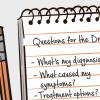
Talking With Your Doctor
… important to you. Speak up with your concerns. “There’s no such thing as a dumb question in the doctor’s office,” says Dr. Matthew Memoli, an infectious disease doctor at NIH. “I try very hard to make my patients feel comfortable so that they feel comfortable asking … Your friend may think of questions or raise concerns that you hadn’t considered. Many people search online for health information. They use Web-based tools to research symptoms and learn …
NIH Office of Communications and Public Liaison
Health and Science Publications Branch
Building 31, Room 5B52
Bethesda, MD 20892-2094
Contact Us:
nihnewsinhealth@od.nih.gov
Phone: 301-451-8224
Share Our Materials: Reprint our articles and illustrations in your own publication. Our material is not copyrighted. Please acknowledge NIH News in Health as the source and send us a copy.
For more consumer health news and information, visit health.nih.gov.
For wellness toolkits, visit www.nih.gov/wellnesstoolkits.