
A monthly newsletter from the National Institutes of Health, part of the U.S. Department of Health and Human Services
Search

Can You Recognize a Heart Attack or Stroke?
… 90 seconds, and stroke kills someone about every 4 minutes, according to the U.S. Centers for Disease Control and Prevention. Quick medical help could prevent many of these deaths. Fast … shoulder pain. Many don’t know that women often have different heart attack symptoms than men. For instance, instead of having chest pain during a heart attack, women may feel extremely … vegetables, and low in saturated fat. Get regular physical activity and don’t smoke. “I think one of the most important things we can do is to take a basic [qtip:CPR|Cardiopulmonary …

Hidden Hazards
… body. It causes damage to the brain and nervous system. Lead exposure is especially dangerous for children. There is no “safe” level of lead in the bloodstream. Lead exposure causes problems … be added to gasoline and paint. These uses are no longer permitted. But paint lasts in homes for a long time. If you live in a house built before 1978, it likely has lead paint somewhere. If … from the EPA and CDC . … Radon on the Radar … You likely know that smoking cigarettes is one cause of lung cancer. But cigarettes aren’t the only toxin that increases that risk. An …

Your Body’s Disease Defenses
… other microbes are constantly invading from the outside world. Your body has a defense system for such invaders. It’s called the immune system. Your immune system is made up of trillions of … system is just starting to develop. Antibodies that are passed along from the mother can last for many months. They help protect a new baby until their immune system starts to develop. The … centers essentially guess at how the virus may change over time. “Germinal centers are one of the most amazing things your immune system does,” says Crotty. Take the COVID vaccines as …

Addressing Childhood Bullying
… studies child development at the University at Buffalo. “But not all aggression is bullying.” For behavior to be considered bullying, it must feature two things, Ostrov explains. One is a power imbalance between the child doing the bullying and the child being bullied. That …

See, Hear, Speak
… When setting off for kindergarten or first grade, a child may feel prepared with a backpack loaded with crayons, … have trouble focusing and flourishing in the classroom. NIH-funded scientists are searching for better ways to recognize and treat these types of problems as early as possible. Nearly all … is amblyopia, or lazy eye. It often arises if the eyes point in different directions, or if one eye produces a better image than the other. The brain starts to shut down signals from the …

Rough Up Your Diet
… Fiber—you know it's good for you. But if you're like many Americans, you don't get enough. In fact, most of us get less … is sometimes stronger when scientists look at whole-grain intake rather than just fiber. One NIH-funded study of nearly 500,000 older adults found no relationship between fiber and …

Opportunities Abound for Moving Around
… have fun without spending a lot of money. Moving more and sitting less can reduce your risk for many serious conditions, including heart disease, diabetes, [qtip:osteoporosis|A disease in … moderate activity, 5 days a week.) Why aren’t we more active? “Lack of time is a common reason for not exercising,” says Dr. Mary Evans, an NIH expert on physical activity and nutrition. … others can also have a positive effect. “Many people are more likely to walk if they’ve got one or more buddies to walk with,” Glicksman says. “When you think about what brings people …
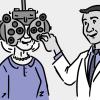
Your Aging Eyes
… You may barely notice the changes at first. Maybe you’ve found yourself reaching more often for your glasses to see up close. You might have trouble adjusting to glaring lights or reading … changes to your eyes. But you can take steps to protect your vision and reduce your risk for serious eye disease in the future. Effective treatments are now available for many disorders … your quality of life,” Owsley says. The clear, curved lens at the front of your eye may be one of the first parts of your body to show signs of age. The lens bends to focus light and form …
NIH Office of Communications and Public Liaison
Health and Science Publications Branch
Building 31, Room 5B52
Bethesda, MD 20892-2094
Contact Us:
nihnewsinhealth@od.nih.gov
Phone: 301-451-8224
Share Our Materials: Reprint our articles and illustrations in your own publication. Our material is not copyrighted. Please acknowledge NIH News in Health as the source and send us a copy.
For more consumer health news and information, visit health.nih.gov.
For wellness toolkits, visit www.nih.gov/wellnesstoolkits.