
A monthly newsletter from the National Institutes of Health, part of the U.S. Department of Health and Human Services
Search

Painful Joints?
… common than rheumatoid arthritis. Osteoarthritis is caused by wear and tear on your joints. In rheumatoid arthritis, your [qtip:immune system|The system that protects your body from … doctors use medical history, physical exams, X-rays, and lab tests. There’s no single test for the disease. It’s not easy to diagnose. “The joint swelling in rheumatoid arthritis is … osteoarthritis,” explains Dr. Michael M. Ward, who oversees rheumatoid arthritis research at NIH. Your joints may appear red and feel warm. Pain and stiffness may be worse after you wake up …
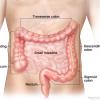
Detecting Colorectal Cancer
… stages. A colonoscopy uses a tool called a colonoscope to see inside your colon. Doctors look for cancer as well as pre-cancerous growths called polyps. They can remove any growths they find … a sample of stool (feces) and send it to a lab. The lab then looks for tiny amounts of blood in the stool or other signs, like cancer-specific DNA. A newer screening test, called a virtual … type of screening would be best for you. For more information on colorectal cancer screening, visit www.cancer.gov/types/colorectal/screening-fact-sheet . …

Learn About Obesity and Cancer Risk
… is the cause of these cancers. People who are obese or overweight may differ from lean people in ways other than their body fat. It’s possible that these other differences might explain … different cancer risks. Yet, studies have consistently linked obesity with an increased risk for several types of cancer. Researchers are now exploring what biological mechanisms might link obesity and cancer. You can learn more about obesity and cancer by visiting cancer.gov/obesity-fact-sheet . …

Dealing with Dementia
… that most often affects the elderly. It’s caused by the failure or death of nerve cells in the brain. By some estimates, up to half of people ages 85 and older may have Alzheimer’s … disease, the most common cause of dementia. Although age is the greatest risk factor for dementia, it isn’t a normal part of aging. Some people live into their 90s and beyond with no … symptoms that can be caused by many different diseases,” says Dr. Sanjay Asthana, who heads an NIH-supported Alzheimer’s disease center at the University of Wisconsin. “Symptoms of dementia …
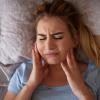
Grinding Your Teeth?
… ear pain, or headache? If so, you may have a condition called bruxism. That’s the medical term for clenching your jaw or teeth or grinding your teeth. Mild or occasional tooth grinding or … It can damage your teeth and make them crack, loosen, or even fall out. Bruxism is more common in children than adults. Many people with bruxism don’t realize they have it, especially if it … sleep. They can also suggest how to protect your teeth and break the habit of tooth grinding. Visit your dentist regularly. They can check for signs of bruxism, such as tooth wear and jaw …

Community Immunity
… Parents know that kids are vulnerable to a host of infectious diseases. Research supported by NIH and others proves that the benefits of vaccines in preventing illness and death greatly outweigh the risks. The list of childhood diseases can be … But a measles outbreak in 2005 was traced to one unvaccinated U.S. resident infected during a visit to Europe. The returning traveler infected American children who hadn’t been vaccinated …

You’re Never Too Old
… your health. Fitting exercise and physical activity into your day can enhance your life in so many ways. Regular physical activity can improve your balance and boost or maintain your … it’s important to get started and stay active,” says Dr. Richard J. Hodes, director of NIH’s National Institute on Aging. “We know that people want to live independently for as long as … … , a mini exercise guide, shows you how you can be active anytime, anywhere. To learn more, visit the … Go4Life … website. You’ll find exercises, success stories and tips to help you stay …

Stop the Spread of Superbugs
… have helped to control and destroy many of the harmful bacteria that can make us sick. But in recent decades, antibiotics have been losing their punch against some types of bacteria. In … are no longer responding to antibiotics, even the newer ones,” says Dr. Dennis Dixon, an NIH expert in bacterial and fungal diseases. Scientists have been trying to keep ahead of newly … bacteria. Their findings could point the way to innovative new treatments. While scientists search for ways to beat back these stubborn bacteria, you can help by preventing the spread of …
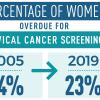
Are You Overdue for a Cervical Cancer Screening?
… Cervical cancer starts in the cervix. The cervix is at the lower end of the uterus, where a fetus grows. Screening for cervical cancer has dramatically reduced new cases and deaths. But many women are overdue for … signs or symptoms. But it can be detected early with regular screenings. Screenings require a visit to your health care provider. They will collect cells from your cervix with a brush and …
Bad Air Day
… In many parts of the country, summer has the worst air quality of any season. When the forecast says it’s a code red day for air quality, what does it mean for your health? If you’ve planned a picnic, a bike ride or … says Dr. Darryl Zeldin, acting clinical director of environmental health sciences at NIH. He and other NIH-supported researchers have been studying how substances in the air can …
NIH Office of Communications and Public Liaison
Health and Science Publications Branch
Building 31, Room 5B52
Bethesda, MD 20892-2094
Contact Us:
nihnewsinhealth@od.nih.gov
Phone: 301-451-8224
Share Our Materials: Reprint our articles and illustrations in your own publication. Our material is not copyrighted. Please acknowledge NIH News in Health as the source and send us a copy.
For more consumer health news and information, visit health.nih.gov.
For wellness toolkits, visit www.nih.gov/wellnesstoolkits.