
A monthly newsletter from the National Institutes of Health, part of the U.S. Department of Health and Human Services
NIH Websites Are Changing
NIH is moving the launch of its new website to the fall to ensure the best possible experience for everyone who relies on our websites for health information, research, funding opportunities, and other resources.
Addressing ADHD
Support for Parents and Kids
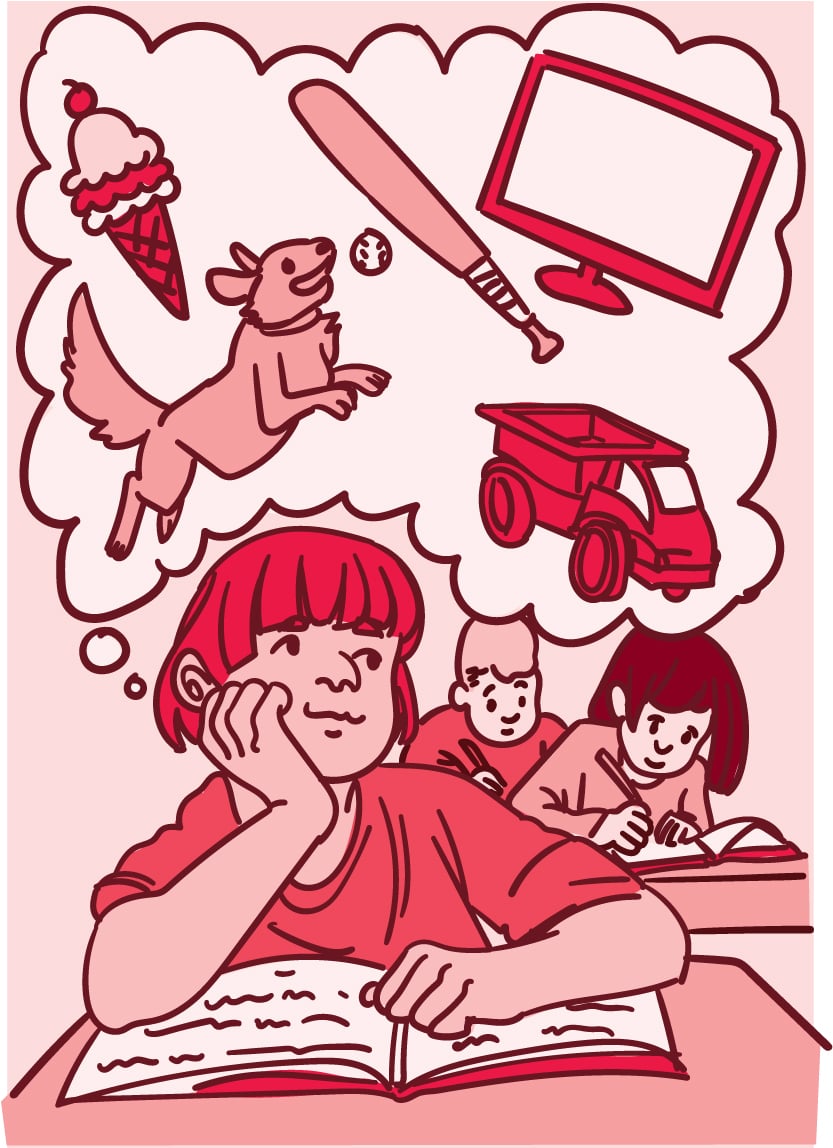
Kids often struggle to pay attention or have too much energy. If these difficulties last a long time and cause problems in multiple situations, they might be signs of attention-deficit/hyperactivity disorder, or ADHD. ADHD makes it harder to learn and get things done. Researchers are finding new ways to help kids with ADHD—and their parents—gain skills to better manage symptoms.
Some kids with ADHD struggle with paying attention. This makes it tough to complete tasks and stay focused in class or conversations. Other kids may show hyperactivity or impulsivity, so they move around and talk a lot. Some kids have both types of symptoms. Symptoms can change over time and follow people into adulthood.
“ADHD can be a lifelong disorder,” explains Dr. Lauren Friedman, a psychologist at Arizona State University. “But it can look a little different in adults.” For example, adults with ADHD might feel very restless during a meeting, even if they don’t leave their seat like a kid might.
ADHD can be tough to diagnose because other conditions have similar symptoms. “If someone is anxious, they’re going to have worried thoughts that distract them,” Friedman says. “Depression or a learning disability can also cause difficulty paying attention.”
Seeing a doctor is the first step. A medical exam can rule out other causes of symptoms. But diagnosing ADHD is a process. It can also involve seeing specialists, like mental health professionals, and interviews with family members and teachers. An ADHD diagnosis requires that symptoms persist over time and occur in multiple settings—not only at school or at home.
ADHD treatment includes medications, different types of therapy, or both. Medications may help some kids control behaviors that disrupt their daily life, but they can also have side effects. Therapy teaches skills for managing symptoms and creating routines to support daily life.
Parents of kids with ADHD can also take behavior management training. This teaches parents how to better help their children.
Because genes influence ADHD, many families have both a parent and a child with the condition. Parents’ symptoms can make it hard for them to use the strategies they learn from behavior management training to help their kids. Friedman is studying how to better support those families.
In Friedman’s study, parents with ADHD learn how to assist their kids through standard behavior management training. But the parents also learn skills to help them manage their own symptoms.
“We give parents skills to help with organization and time management to make it more likely they’ll be able to use the strategies that they learn for their kids effectively and consistently,” Friedman says.
Her study is also testing a smartphone app that reminds parents to use the skills they are learning. The app sends customized reminders when they are most needed. For example, “if mornings are really hectic and they’re forgetting to use their skills at that time, we can push reminders to parents in the morning,” Friedman says.
With the right support, children with ADHD can better manage symptoms and are more likely to reach their goals. See the Wise Choices box for strategies parents can use to help kids with ADHD.

NIH Office of Communications and Public Liaison
Health and Science Publications Branch
Building 31, Room 5B52
Bethesda, MD 20892-2094
Contact Us:
[email protected]
Phone: 301-451-8224
Share Our Materials: Reprint our articles and illustrations in your own publication. Our material is not copyrighted. Please acknowledge NIH News in Health as the source and send us a copy.
For more consumer health news and information, visit health.nih.gov.
For wellness toolkits, visit www.nih.gov/wellnesstoolkits.