
A monthly newsletter from the National Institutes of Health, part of the U.S. Department of Health and Human Services
Search

Trouble With Touch?
… skin is your largest sensory organ by far,” says Dr. Alexander Chesler, a touch researcher at NIH. “It encompasses your entire body. And the precision, accuracy, and speed at which it can … can affect your quality of life. Over the last decade, researchers have made major progress in understanding how touch works. They’re now using this information to help address pain and … cells affect how sensations are felt throughout the body, and what happens if they’re damaged. For example, researchers recently discovered a protein that triggers the sensation of gentle …

Connective Tissue Disorders
… can start to erode connective tissues. So can certain … [qtip:autoimmune diseases|Conditions in which the body’s disease fighting system mistakenly attacks and destroys the body’s own … all possible genetic factors that can lead to the condition. Researchers are continuing to search for the causes of connective tissue disorders. Gensemer, working with Dr. Russell Norris … Oro, a stem cell researcher at Stanford University. Oro and others are now working on a large NIH-funded project to make it easier to get stem cell therapies manufactured, so the treatment …

Mystified by Menopause?
… Menopause—it’s a transition that looms large in the minds of many women as they approach age 50. It’s sometimes called the “change of life.” … carefully. Knowledge about menopause has grown significantly over the last 2 decades. Large NIH-funded studies of women before, during and after menopause have given new insights into how … medicine approaches,” says Sherman. To learn more about NIH-funded studies of menopause, visit ClinicalTrials.gov . If you’re nearing or in the midst of menopause, learn what you can …

Discoveries in Basic Science
… Science can be slow and unpredictable. Each research advance builds on past discoveries, often in unexpected ways. It can take many years to build up enough basic knowledge to apply what … how the basic biological processes work in the first place,” says Dr. Jon Lorsch, director of NIH’s National Institute of General Medical Sciences. “And of course, if you don’t understand how … the peer-review process at NIH’s scientific journal of environmental health research and news. Different experts evaluate the quality of the research. They look at the methods and how …
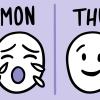
Shake it Off
… But a bad mood or major mood swings that go on too long may signal a bigger problem. The good news is that certain healthy habits can help you boost your mood. “Some people are more moody … Normal mood actually varies from person to person,” explains Dr. Carlos Zarate, chief of NIH’s mood disorders group. That’s because we all have different “temperaments,” or combinations … These are fairly stable over time. “Considerable research shows that people really differ in their basic temperament,” says Dr. Maria Kovacs, an NIH-funded psychologist at the University …

Consider Your Liver
… that the body needs to stay healthy,” says Dr. Marc Ghany, a liver researcher and clinician at NIH. “It also cleanses the body of toxins and breaks down substances that could be harmful to the … working even under stress. But over time, damage can build up and cause problems. The good news is you can take steps to keep your liver healthy. And many liver diseases can now be treated or even cured, thanks in large part to NIH-supported discoveries. … Spotting Liver Problems … There are many kinds of …

The World Inside Your Mouth
… germs like bacteria, fungi, and viruses.]. Together, all the microbes living in your mouth are known as the oral microbiome. Scientists believe the oral microbiome can … these microbes living in your mouth,” says Dr. Christian Abnet, an oral cancer researcher at NIH. “Even people with good oral hygiene have a thriving microbiome in their mouth.” The set of … usually doesn’t change much over time, at least in adults. When it does change, it can be bad news. “People tend to have certain microbes in specific proportions,” says Dr. Akintunde Emiola, …

Mouth Microbes
… Do you know what’s in your mouth? It’s home to about 700 species of [qtip:microbes|Microscopic germs like bacteria, … fungus, and more. “Everybody has these microbes in their mouth,” says Dr. Robert Palmer, an NIH expert on oral microbes. Some microbes are helpful. Others can cause problems like tooth … microbe. There are several different types of microbes in the plaque that make acid. The good news is that limiting sweets and brushing and flossing regularly can help prevent bad microbes …

A Well-Aged Mind
… thinking skills and ability to perform everyday tasks. It’s common to experience some decline in cognitive function as you get older. That may mean occasionally losing things, forgetting … as a computer disk for memory and thinking,” explains Dr. Marie Bernard, an aging expert at NIH. “As you get older it gets fuller and fuller. So, it can get more difficult to retrieve data … who didn’t drink. This was true even if they started misusing alcohol later in life. The good news, she explains, is that some problems with thinking or memory caused by medications or …

Safe Driving
… freedom. But it’s also one of riskiest things you do every day. More than 36,000 people died in car accidents in the U.S. in 2018. Millions more are injured each year. Many things can make … calls us or texts us, we want to respond immediately,” says Dr. Bruce Simons-Morton, an NIH expert on teen driving. To drive safely, we have to overcome that powerful impulse, he … driver or have been driving for decades, it’s important to think about safe driving. The good news is that advances in car design and safety technology are helping protect you behind the …
NIH Office of Communications and Public Liaison
Health and Science Publications Branch
Building 31, Room 5B52
Bethesda, MD 20892-2094
Contact Us:
nihnewsinhealth@od.nih.gov
Phone: 301-451-8224
Share Our Materials: Reprint our articles and illustrations in your own publication. Our material is not copyrighted. Please acknowledge NIH News in Health as the source and send us a copy.
For more consumer health news and information, visit health.nih.gov.
For wellness toolkits, visit www.nih.gov/wellnesstoolkits.