
A monthly newsletter from the National Institutes of Health, part of the U.S. Department of Health and Human Services
Search

Preventing Food Poisoning
… thing is you can’t see these germs, and you can’t taste them,” says Dr. William Alexander, an NIH expert in food-borne illnesses. Germs can get into your food many ways. They may already be in some … to wash your hands and any surfaces food touches when you’re preparing it. Leaving food out for too long or not storing it at proper temperatures can help germs grow and multiply. Be sure …

Can You Recognize a Heart Attack or Stroke?
… or someone else’s. Heart disease and stroke are 2 of the top killers among both women and men in the U.S. Nationwide, someone dies from a heart attack about every 90 seconds, and stroke kills someone about every 4 minutes, according to the U.S. Centers for Disease Control and Prevention. Quick medical help could prevent many of these deaths. Fast … of ‘I just don’t feel quite right and don’t know why,’ ” says Dr. Patrice Desvigne-Nickens, an NIH expert in heart health. The symptoms of stroke include sudden difficulty seeing, speaking, or …
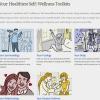
Become Your Healthiest Self
… improve your relationships, emotional well-being, physical health, and surroundings. Check out NIH’s “ Your Healthiest Self: Wellness Toolkits ” for science-based health tips in five different areas. Each area has checklists of tips you can print for yourself or share …

Complementary Health Approaches for Pain Relief
… health approaches. But how do you know if they’re safe and helpful? To help you find answers, NIH has a free e-book called “Pain: Considering Complementary Approaches.” It summarizes the evidence behind different complementary approaches for pain relief. These include acupuncture, massage therapy, spinal manipulation, and more. … pain . Chronic pain is pain that lasts for three months or longer. It affects an estimated 1 in 5 adults in the U.S. Some studies have shown that certain complementary approaches can help …

Artificial Intelligence and Medical Research
… Artificial intelligence, or AI, has been around for decades. In the past 20 years or so, it’s become a growing part of our lives. Researchers are … on the power of AI to improve medicine and health care in innovative and far-reaching ways. NIH is on the cutting edge supporting these efforts. At first, computers could simply do …

Looking at the Heart
… can help prevent more serious troubles later and save lives. Doctors have many techniques for diagnosing heart disease. Among these are imaging tests that take “pictures” of your heart. A new NIH Web page called “ Picturing the Heart ” gives a simple overview of 6 imaging tools that look … angiography and coronary calcium scan—look specifically for signs of clogged arteries in the heart. This type of blockage, called atherosclerosis, happens slowly over time and leads …
Robotic Device Helps Kids With Cerebral Palsy
… NIH researchers have been developing a robotic device to help improve the way children with … but long-term problems often remain. Dr. Thomas Bulea and his team of researchers at the NIH Clinical Center created a wearable robotic device, called an exoskeleton, to help kids … weren’t letting the exoskeleton do all the work to straighten their legs. “The improvements in their walking, along with their preserved muscle activity, make us optimistic that our …

Keep AMD Vision Loss In Check
… condition called age-related macular degeneration, or AMD, is the leading cause of vision loss in older adults in the U.S. It’s caused by light-sensing tissue in the back of your eye, or … AMD at age 55 and older. Smoking, high cholesterol, and high blood pressure increase your risk for AMD. So does having a family history of the disease. There are two types of AMD. Dry AMD, … stages, it’s all about a healthy lifestyle,” says Dr. Tiarnán Keenan, an ophthalmologist at NIH. This includes eating a healthy diet, getting enough physical activity, and not smoking. A …

Your Microbes and You
… make you ill. But what you may not realize is that trillions of microbes are living in and on your body right now. Most don’t harm you at all. In fact, they help you digest food, … to study these rich microbial communities and their genes—the “microbiome.” In 2007, NIH launched the Human Microbiome Project to study microbes in and on the body. Earlier this … and their genes more than most of us thought. One of the most important things microbes do for us is to help with digestion. The mix of microbes in your gut can affect how well you use and …

Be a Citizen Scientist
… as simple as playing an online game or sharing a blood sample. Or you could help collect data in your community. You might even help guide the types of questions researchers are investigating … They have all sorts of skills and contextual knowledge,” says Dr. Jennifer Couch, who heads NIH’s citizen science working group. “Citizen science in its broadest sense draws on the insights … You might need to be of a certain age or live in a specific region. Some projects are designed for people who have certain health conditions. But others are open to everyone. … All of Us … …
NIH Office of Communications and Public Liaison
Health and Science Publications Branch
Building 31, Room 5B52
Bethesda, MD 20892-2094
Contact Us:
nihnewsinhealth@od.nih.gov
Phone: 301-451-8224
Share Our Materials: Reprint our articles and illustrations in your own publication. Our material is not copyrighted. Please acknowledge NIH News in Health as the source and send us a copy.
For more consumer health news and information, visit health.nih.gov.
For wellness toolkits, visit www.nih.gov/wellnesstoolkits.