
A monthly newsletter from the National Institutes of Health, part of the U.S. Department of Health and Human Services
Search
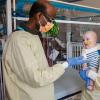
Baby With Rare Disease Gets Personalized Gene Therapy
… severe skin condition. But treating rarer genetic conditions has been more challenging. A new NIH-funded study used a personalized gene-editing approach in a baby born with a rare, often deadly disorder. The baby had a disease called CPS1 deficiency. … he was six months old. A few weeks later, he needed less medication to keep ammonia levels in check. And his diet could include more protein. Protein intake can lead to ammonia buildup in …

A Priceless Gift: Your Family Health History
… Conditions such as cancer, heart disease, and diabetes often run in families. Tracing the illnesses of your parents, grandparents, and other blood relatives can … specific disorders. It could suggest vital screening tests and treatments before any disease is evident. That’s why it’s so important to discuss your family’s health history. The U.S. … to identify and possibly fix the gene glitches that raise a person’s risk for diseases. NIH is now working on technology that will help doctors quickly create a health plan based on a …
How Research Works
… what’s true one day changes the next. But when what we know changes, it often means science is working. Research helps us understand the world through careful testing. Each advance builds … can take a long time. But the end result is a better understanding of the world around us. In general, the scientific process follows many steps. First, scientists start with a question. … evidence. Science is an evolving process. But it’s the best way we have to seek out answers. NIH has created a one-page guide to explain more about how research works. Find the guide in …

Kids’ Sleep Linked to Brain Health
… ages 6 to 12 get at least nine hours of sleep each day. But many don’t get that much. A new NIH-funded study shows that getting enough sleep may be especially important for preteen brains. … the start of the study and two years later. These showed that the groups also had differences in brain structure. The findings suggest that sleep affects learning and behavior through specific brain changes. “Children who had insufficient sleep had smaller volume in certain areas of the brain responsible for attention, memory, and inhibition control, compared …

Eating Plan for a Healthy Heart
… the diet information out there. The DASH food plan—Dietary Approaches to Stop Hypertension —is supported by NIH research. It’s a flexible and balanced eating plan designed to improve the health of your … dairy products, fish, poultry, beans, nuts, and vegetable oils. The plan limits foods high in saturated fats. It also encourages you to cut back on sugar-sweetened beverages and sweets. …

Antibodies Protect Against COVID-19 Reinfection
… looked at more than 3 million people who had an antibody test for SARS-CoV-2. SARS-CoV-2 is the virus that causes COVID-19. They found that about 11% of people had SARS-CoV-2 antibodies. … more than 90 days after. About 3% to 4% of people with negative antibody tests got COVID-19 in each time period. But those who had antibodies were less likely to have COVID-19 as time went … result from an antibody test may be at lower risk for future infection with SARS-CoV-2. NIH’s Dr. Lynn Penberthy, who led the research team, explains that more questions still need to …

Shape Your Family’s Habits
… can influence a child, including friends, teachers and the things they see when they sit in front of the TV or computer. If you’re a parent, know that your everyday behavior plays a big … and feeling good about yourself,” says Dr. Lynne Haverkos, a child development specialist at NIH. “Some research suggests that physical activity might even help improve children’s thinking … obesity, a growing concern in this country. Today, nearly 1 in 3 children in the United States is overweight or obese. “Being overweight puts a lot of stress on joints, muscles, bones and the …

Don’t Just Sit There!
… half of your waking hours sitting or inactive for long stretches of time—at work, at school, in the car or watching TV or another type of screen. Maybe it’s time to try standing up instead … time with even short bouts of activity—like getting up from your desk and moving around—is associated with smaller waist circumference and other indictors of good health.” When you’re … your day,” says Dr. Charles E. Matthews, who studies physical activity and cancer risk at NIH. “Your muscles are contracting, you’re maintaining your balance, and you’re resisting the …
Bad Air Day
… In many parts of the country, summer has the worst air quality of any season. When the forecast … says Dr. Darryl Zeldin, acting clinical director of environmental health sciences at NIH. He and other NIH-supported researchers have been studying how substances in the air can … These substances can make it hard to breathe and can sap your energy. If the air quality is especially poor, it may take a few days for your body to recover. And if you’re regularly …

Rough Up Your Diet
… Fiber—you know it's good for you. But if you're like many Americans, you don't get enough. In fact, most of us get less than half the recommended amount of fiber each day. Dietary fiber is found in the plants you eat, including fruits, vegetables and whole grains. It's sometimes … stroke and high blood pressure," says Dr. Somdat Mahabir, a nutrition and disease expert with NIH's National Cancer Institute. Fiber may also lessen the risk for [qtip:type 2 diabetes|A …
NIH Office of Communications and Public Liaison
Health and Science Publications Branch
Building 31, Room 5B52
Bethesda, MD 20892-2094
Contact Us:
nihnewsinhealth@od.nih.gov
Phone: 301-451-8224
Share Our Materials: Reprint our articles and illustrations in your own publication. Our material is not copyrighted. Please acknowledge NIH News in Health as the source and send us a copy.
For more consumer health news and information, visit health.nih.gov.
For wellness toolkits, visit www.nih.gov/wellnesstoolkits.