
A monthly newsletter from the National Institutes of Health, part of the U.S. Department of Health and Human Services
Search

The Salty Stuff
… Salt is essential to our body’s fluids. That’s likely why we evolved to enjoy its taste. On the other … the sodium we ingest is from salt, it’s difficult to separate the effects of salt and sodium in many studies. However, it’s the sodium part most doctors focus on. “The best known effect of … health is the relationship between sodium and blood pressure,” explains Dr. Catherine Loria of NIH’s National Heart, Lung and Blood Institute (NHLBI). Dozens of studies, in both animals and …

Caring for Concussions
… Many types of accidents can cause a bang to the brain. Each year, more than 2 million people in the U.S. visit an emergency room for a traumatic brain injury. Many others experience a blow … Brain injuries can range from mild to severe. The most common type of mild brain injury is a concussion. Concussions can be caused by an impact to your head or whiplash motion to your … they’re called “mild,” concussions should be taken seriously, explains Dr. Geoffrey Manley, an NIH-funded traumatic brain injury researcher at the University of California, San Francisco. Most …
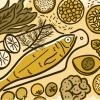
Plan Your Plate
… What’s the eating style that’s best for health? Is it a Mediterranean eating plan? Vegetarian? Low carb? With all the eating styles out there, … based, that allows you to meet your nutritional requirements, and that you can stick to in the long run,” says Dr. Holly Nicastro, an NIH nutrition research expert. “It’s not going to do you any good to follow a diet that has you …

Artificial Intelligence and Your Health
… There’s a lot of talk about artificial intelligence, or AI, these days. AI is everywhere—from virtual assistants to facial recognition software. The technology is even … it helping advance scientific research? “AI is basically trying to teach computers to ‘think’ in the same way as the human brain,” says Dr. Despina Kontos, an AI researcher at Columbia … can really work well together to improve human health,” explains Dr. Grace C.Y. Peng, an NIH expert on AI in medicine. “Computers are very good at doing calculations at a large scale, …

Halting Heart Attack and Stroke
… at risk for having one? More than 1.5 million people have a heart attack or stroke every year in the U.S. Heart attack happens when blood flow to the heart gets blocked, most commonly by a … Stroke happens when blood flow to the brain gets disrupted. The most common type of stroke is caused by a blood clot stuck in a blood vessel that feeds the brain. Stroke can also be caused … is key to improving your chances of survival,” says Dr. Gina Wei, a heart-health expert at NIH. Treatment may include either rapidly dissolving or removing the clot to open up the blocked …

Feeling Stressed?
… to time. Stress can give you a rush of energy when it’s needed most—for instance, competing in sports, working on an important project, or facing a dangerous situation. The … swelling, and redness caused by the body’s protective response to injury or infection.], which is thought to contribute to many diseases of aging. Inflammation has been linked to … like cancer to be stressful for patients, caregivers, and long-term cancer survivors,” says NIH’s Dr. Paige Green McDonald, an expert on stress and cancer biology. “However, there’s no …
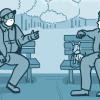
Understanding COVID-19
… developing tools that promise to slow and eventually help us overcome the pandemic. COVID-19 is caused by a new coronavirus called SARS-CoV-2. There are many types of coronaviruses. Some … have led to fatal disease outbreaks. These include severe acute respiratory syndrome (SARS) in 2003, Middle East respiratory syndrome (MERS) in 2012, and now COVID-19. Coronaviruses are … respiratory droplets that tend to drop within six feet,” says Dr. Anthony Fauci, director of NIH’s National Institute of Allergy and Infectious Diseases. That’s why it’s important to stay at …

Ear Infection Treatment Shouldn’t Be Shortened
… Middle ear infections are common in kids. The illness is often caused by bacteria, and can be treated with antibiotics. But bacteria can become … resistant to antibiotics. Shorter treatments might also reduce other side effects. A new NIH-funded study provides some answers—at least for children under age 2. The study enrolled 520 …

Update Your Doctor on Your Family’s Health
… the types of cancer screening tests your doctor recommends. Your family’s medical history is one of the best tools for predicting your risk for developing cancer and other disorders. That’s why doctors usually ask about your family’s health the first time you visit. NIH-funded researchers across the country set out to learn how changes in family history might affect a patient’s cancer risk and the screening tests recommended by …

Tracking Symptoms After Brain Injury
… sports injury can cause a mild traumatic brain injury, or concussion. Most people will recover in a few weeks to months. But some people’s symptoms continue long afterward. Researchers want to better understand why some people’s brains don’t heal after a concussion. This condition is called post-concussive syndrome. It may involve headaches, fatigue, or dizziness. You can also … personnel and others who have experienced a traumatic brain injury,” says Dr. Jessica Gill, an NIH expert on brain injury who led the study. …
NIH Office of Communications and Public Liaison
Health and Science Publications Branch
Building 31, Room 5B52
Bethesda, MD 20892-2094
Contact Us:
nihnewsinhealth@od.nih.gov
Phone: 301-451-8224
Share Our Materials: Reprint our articles and illustrations in your own publication. Our material is not copyrighted. Please acknowledge NIH News in Health as the source and send us a copy.
For more consumer health news and information, visit health.nih.gov.
For wellness toolkits, visit www.nih.gov/wellnesstoolkits.