
A monthly newsletter from the National Institutes of Health, part of the U.S. Department of Health and Human Services
Search

How Research Works
… can take a long time. But the end result is a better understanding of the world around us. In general, the scientific process follows many steps. First, scientists start with a question. … evidence. Science is an evolving process. But it’s the best way we have to seek out answers. NIH has created a one-page guide to explain more about how research works. Find the guide in English or Spanish . …

Kids’ Sleep Linked to Brain Health
… ages 6 to 12 get at least nine hours of sleep each day. But many don’t get that much. A new NIH-funded study shows that getting enough sleep may be especially important for preteen brains. Researchers identified more than 4,000 children, ages 9 or 10, who got at … the start of the study and two years later. These showed that the groups also had differences in brain structure. The findings suggest that sleep affects learning and behavior through …

Eating Plan for a Healthy Heart
… out there. The DASH food plan—Dietary Approaches to Stop Hypertension —is supported by NIH research. It’s a flexible and balanced eating plan designed to improve the health of your … dairy products, fish, poultry, beans, nuts, and vegetable oils. The plan limits foods high in saturated fats. It also encourages you to cut back on sugar-sweetened beverages and sweets. …
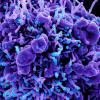
Antibodies Protect Against COVID-19 Reinfection
… get COVID-19 again. Researchers looked at more than 3 million people who had an antibody test for SARS-CoV-2. SARS-CoV-2 is the virus that causes COVID-19. They found that about 11% of people … more than 90 days after. About 3% to 4% of people with negative antibody tests got COVID-19 in each time period. But those who had antibodies were less likely to have COVID-19 as time went … result from an antibody test may be at lower risk for future infection with SARS-CoV-2. NIH’s Dr. Lynn Penberthy, who led the research team, explains that more questions still need to …

Shape Your Family’s Habits
… can influence a child, including friends, teachers and the things they see when they sit in front of the TV or computer. If you’re a parent, know that your everyday behavior plays a big … habits that last throughout their lives. Healthy eating and physical activity are essential for children of any age. “Good nutrition and physical activity are important for building strong … and feeling good about yourself,” says Dr. Lynne Haverkos, a child development specialist at NIH. “Some research suggests that physical activity might even help improve children’s thinking …
Don’t Just Sit There!
… most people nationwide, you’ve spent more than half of your waking hours sitting or inactive for long stretches of time—at work, at school, in the car or watching TV or another type of screen. Maybe it’s time to try standing up instead … your day,” says Dr. Charles E. Matthews, who studies physical activity and cancer risk at NIH. “Your muscles are contracting, you’re maintaining your balance, and you’re resisting the …
Rough Up Your Diet
… Fiber—you know it's good for you. But if you're like many Americans, you don't get enough. In fact, most of us get less … stroke and high blood pressure," says Dr. Somdat Mahabir, a nutrition and disease expert with NIH's National Cancer Institute. Fiber may also lessen the risk for [qtip:type 2 diabetes|A …
The Salty Stuff
… It turns out that too much salt can lead to a host of health problems. The chemical name for dietary salt, or table salt, is sodium chloride. Since 90% of the sodium we ingest is from salt, it’s difficult to separate the effects of salt and sodium in many studies. However, it’s the sodium part most doctors focus on. “The best known effect of … health is the relationship between sodium and blood pressure,” explains Dr. Catherine Loria of NIH’s National Heart, Lung and Blood Institute (NHLBI). Dozens of studies, in both animals and …
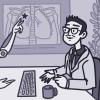
Artificial Intelligence and Your Health
… it helping advance scientific research? “AI is basically trying to teach computers to ‘think’ in the same way as the human brain,” says Dr. Despina Kontos, an AI researcher at Columbia … can really work well together to improve human health,” explains Dr. Grace C.Y. Peng, an NIH expert on AI in medicine. “Computers are very good at doing calculations at a large scale, … being used daily is medical imaging. Computers help doctors comb through CT and MRI scans for signs of problems like heart disease and cancer. “AI can look at images very closely, in a …

Halting Heart Attack and Stroke
… A heart attack or stroke can happen within seconds. Getting treatment fast for these medical emergencies can mean the difference between life and death or disability. But … at risk for having one? More than 1.5 million people have a heart attack or stroke every year in the U.S. Heart attack happens when blood flow to the heart gets blocked, most commonly by a … is key to improving your chances of survival,” says Dr. Gina Wei, a heart-health expert at NIH. Treatment may include either rapidly dissolving or removing the clot to open up the blocked …
NIH Office of Communications and Public Liaison
Health and Science Publications Branch
Building 31, Room 5B52
Bethesda, MD 20892-2094
Contact Us:
nihnewsinhealth@od.nih.gov
Phone: 301-451-8224
Share Our Materials: Reprint our articles and illustrations in your own publication. Our material is not copyrighted. Please acknowledge NIH News in Health as the source and send us a copy.
For more consumer health news and information, visit health.nih.gov.
For wellness toolkits, visit www.nih.gov/wellnesstoolkits.