
A monthly newsletter from the National Institutes of Health, part of the U.S. Department of Health and Human Services
Search
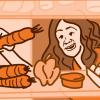
Dejunking Your Diet
… Highly processed foods are often cheap and convenient. But they also tend to be high in calories, added sugar, saturated fat, and salt, and low in fiber. Scientists are starting to … goals even harder. Eating too much of them may lead to weight gain and increase your risk for certain diseases, like cancer, diabetes, and obesity. … What Are Ultra-Processed Foods? … … affect overeating. That requires carefully controlling people’s diets for weeks at a time. But NIH metabolism researcher Dr. Kevin Hall has done just that. In a recent study, he compared …
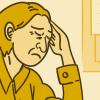
Tension Headaches, Migraine, and More
… Headaches come in many forms. Where you feel the pain, what other symptoms you have, and how long headaches last can vary. For many people, headaches are an occasional nuisance. For others, they can be chronic and … sleep can sometimes be enough. Other headaches may require more intensive interventions. NIH researchers are working to develop more options for people who aren’t helped by current …

Mingling Senses
… like? Does guitar music smell sweet or spicy? These questions might sound like nonsense. But for people with a condition called synesthesia, they describe real experiences. We have five … touch, sight, taste, sound, and smell. Most people experience their senses one at a time. In synesthesia, one sense can be experienced at the same time as another. For example, a person … requiring more than one sense. Synesthesia remains a mystery for now. But Sathian and other NIH-funded researchers plan to keep studying it. The condition may hold keys to understanding …

Bulging Veins
… of men will have some significant leg vein problem,” says Dr. Cheryl McDonald, a physician at NIH. Varicose veins are caused by blood pooling in the veins. This makes them bulge out. Varicose veins most often occur in the legs, but they … veins. Being overweight or obese adds pressure on the veins that can make it even harder for the blood to get back to the heart. Getting active and moving your muscles can help push …

Battling a Bulging Hernia
… Usually, the wall of the abdomen is strong. The muscles keep your intestine in place. But if there’s a weak spot, the intestine can push through and form a hernia. A person … is pushing the wall of the tire outward to create that bulge,” says Dr. Dana K. Andersen, an NIH hernia expert. A hernia developing in the abdomen is extremely common. Babies, children, and … not cause pain may not need treatment right away. The doctor may suggest watching and waiting for changes, like pain, to develop. If a hernia is painful or large, your doctor may suggest you …

Struggling to Hear?
… communicate. That can affect your relationships, emotional well-being, and work performance. For those who need them, hearing aids can help. These electronic devices are worn in or behind the ears. They make sounds louder. Close to 29 million adults could benefit from … look to others. “Hearing loss is far more obvious than a hearing aid,” says Dr. Kelly King, an NIH hearing health expert. “The hard work people do to compensate for their hearing loss, and the …

The Hazards of Hypothermia
… Winter brings many opportunities for cold-weather fun. But it can also bring dangerous temperatures. As you venture outdoors this … the body’s core temperature decreases below 95 degrees Fahrenheit,” says Dr. Basil Eldadah, an NIH aging expert. Hypothermia can happen when you’re exposed to very cold temperatures for too … a slower heartbeat, a weak pulse, and slow or shallow breathing. It could even result in loss of consciousness in advanced stages.” Anyone can get hypothermia when exposed to cold …
Tired, Achy Eyes?
… or computer work, our blink rate just plummets,” says Dr. Chantal Cousineau-Krieger, an NIH ophthalmologist. Not blinking enough can cause your eyes to become dry and uncomfortable. … factors that increase eye dryness may help your eyes feel better, too. Air blowing directly in your face from a fan or from air vents in the car can contribute to eye dryness, says … eye,” Cousineau-Krieger explains. “And just like any other muscle, if you hold the contraction for a long time, the muscle can become fatigued. Eventually, in your 40s, you end up not being …

Childhood Arthritis
… and stiffness of your joints, the connections between bones. Arthritis is most common in adults. But it can also affect children. This is called juvenile arthritis. “Arthritis is particularly a problem for children because their bones and joints are developing and growing,” says Dr. Michael Ombrello, who specializes in treating joint diseases at NIH. There are many types of juvenile arthritis. “Juvenile idiopathic arthritis” is the most …
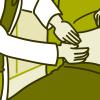
Handling a Hernia
… Everything in your body has its proper place. Muscles and other internal structures help keep your organs … surgery, the same organ may slip out of place again. Many types of surgery increase the risk for a new hernia. Cutting into the internal structures that hold organs in place can weaken those … causes the weakness in an area to last longer, increasing the risk for a hernia. Fischer’s NIH-funded research is looking at ways to reduce the chance of someone getting an incisional …
NIH Office of Communications and Public Liaison
Health and Science Publications Branch
Building 31, Room 5B52
Bethesda, MD 20892-2094
Contact Us:
nihnewsinhealth@od.nih.gov
Phone: 301-451-8224
Share Our Materials: Reprint our articles and illustrations in your own publication. Our material is not copyrighted. Please acknowledge NIH News in Health as the source and send us a copy.
For more consumer health news and information, visit health.nih.gov.
For wellness toolkits, visit www.nih.gov/wellnesstoolkits.