
A monthly newsletter from the National Institutes of Health, part of the U.S. Department of Health and Human Services
Search
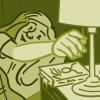
Good Sleep for Good Health
… getting a good night’s sleep on a regular basis seem like a dream. But sleep is as important for good health as diet and exercise. Good sleep improves your brain performance, mood, and … and stroke to obesity and dementia. There’s more to good sleep than just the hours spent in bed, says Dr. Marishka Brown, a sleep expert at NIH. “Healthy sleep encompasses three major things,” she explains. “One is how much sleep you …

Rash Decisions
… You’ve broken out in a red, itchy rash. You’re likely wondering where it came from—and, most importantly, how to … in childhood, and it tends to run in families,” explains Dr. Heidi Kong, a dermatologist at NIH. While some children may outgrow eczema, others will have the disease for life. The cause of eczema is unknown. But skin microbes—bacteria, fungi, and viruses—may play …
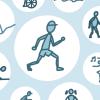
Personalized Exercise?
… feel better. It can also help prevent or delay health problems. Now, researchers are looking for ways to find out which exercises may best suit your body. Different types of exercise can … your [qtip: microbes|The microscopic creatures like bacteria, fungi, and viruses that live in and on your body.]. “The end goal is to be able to provide an exercise “prescription” that is … and the heart at Stanford University. Ashley, Bamman, and Kraus are involved in a large NIH-funded program looking at how exercise affects different molecules in the body. They’re also …

Positive Emotions and Your Health
… body of research suggests that having a positive outlook can benefit your physical health. NIH-funded scientists are working to better understand the links between your attitude and your … of North Carolina, Chapel Hill. “All emotions—whether positive or negative—are adaptive in the right circumstances. The key seems to be finding a balance between the two,” she says. … expand our awareness and open us up to new ideas, so we can grow and add to our toolkit for survival,” Fredrickson explains. “But people need negative emotions to move through difficult …

Your Body’s Disease Defenses
… other microbes are constantly invading from the outside world. Your body has a defense system for such invaders. It’s called the immune system. Your immune system is made up of trillions of cells and proteins. These are found in your blood and every organ of your body. The immune system learns and changes over your … rapidly and robustly to infection,” says Dr. Ronald Germain, an immune system expert at NIH. Other parts of your body, such as the heart or lungs, can accumulate wear and tear with age, …
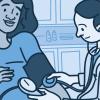
Delivering Safer Pregnancies
… health problems. Most people have healthy pregnancies. Millions of births occur each year in the U.S. But, more than 50,000 people have serious health problems during or after pregnancy. … from pregnancy have been rising in the U.S. in recent years. Knowing the symptoms to look out for and getting care quickly can help keep both mothers and their babies safe. … Warning Signs … … that you’re at high risk. Preeclampsia can turn into a deadly condition called eclampsia. NIH-funded researchers are now studying whether there are benefits to treating milder health …

Addressing Childhood Bullying
… Most people have felt picked on, put down, or left out by peers at some point in their life. Conflict between children, even friends, can be a normal part of development. But … studies child development at the University at Buffalo. “But not all aggression is bullying.” For behavior to be considered bullying, it must feature two things, Ostrov explains. One is a … 1 in 5 high school students are bullied every year. Bullying can have life-long consequences. NIH research is yielding new insights into how to prevent and stop bullying behaviors. … A Cycle …

Build Social Bonds to Protect Health
… be key to good health. Socially connected people tend to live longer. They’re at lower risk for serious health problems. Social bonds are also linked to our mental health, eating habits, … more. Despite the links between our social ties and health, there’s been a troubling increase in social disconnection around the world. About 1 in 3 adults nationwide report feeling lonely. … a social species. We are highly dependent on others from birth,” says Dr. Elizabeth Necka, an NIH expert on social and behavioral science. “So feeling socially isolated can make you feel as …
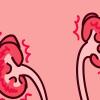
Curbing Chronic Kidney Disease
… body’s filters. These two organs clear out toxins and compounds that would otherwise build up in your blood. This keeps the rest of your body running smoothly. Your kidneys filter around 150 … Himmelfarb, a kidney specialist at Mount Sinai. One of the most common kidney problems for adults is called chronic kidney disease, or CKD. In CKD, your kidneys aren’t able to filter … chronic kidney disease,” says Dr. Meryl Waldman, who studies nutrition and kidney health at NIH. Avoiding foods and drinks high in certain nutrients may prevent or delay some health …

What Your Nose Knows
… and may even help you bond with loved ones. Your ability to smell also plays a key role in your health. If your ability to smell declines, it can affect your diet and nutrition, … the brain, odors can influence many aspects of our lives, such as memory, mood, and emotion. For thousands of years, fragrant plants have been used in healing practices across many cultures, … they have a problem with their sense of smell,” says Howard Hoffman, a public health expert at NIH. A national health and nutrition survey recently revealed that 12% of adults have a smell …
NIH Office of Communications and Public Liaison
Health and Science Publications Branch
Building 31, Room 5B52
Bethesda, MD 20892-2094
Contact Us:
nihnewsinhealth@od.nih.gov
Phone: 301-451-8224
Share Our Materials: Reprint our articles and illustrations in your own publication. Our material is not copyrighted. Please acknowledge NIH News in Health as the source and send us a copy.
For more consumer health news and information, visit health.nih.gov.
For wellness toolkits, visit www.nih.gov/wellnesstoolkits.