A monthly newsletter from the National Institutes of Health, part of the U.S. Department of Health and Human Services
Site Menu
NIH Websites Are Changing
NIH is moving the launch of its new website to the fall to ensure the best possible experience for everyone who relies on our websites for health information, research, funding opportunities, and other resources.
… many subtleties. But people with autism spectrum disorder, or ASD, struggle more than most. For them, communicating with others can be very difficult. Autism is called a “spectrum” disorder … not the same for everyone. Generally, people with autism both have difficulties with social communication and engage in repetitive behaviors. ASD can also affect learning and … as social. They need to be brought into that social world.” Researchers are studying ways to better engage people with autism. They’re developing tools that aid in learning emotions and …
… When setting off for kindergarten or first grade, a child may feel prepared with a backpack loaded with crayons, … to success at school. If a child has problems in these areas, the sooner they’re spotted, the better they can be treated. Sometimes problems with senses, speech, or language fly under the … with the teacher, to understanding what the teacher is saying to them, and to forming social relationships with their peers,” says Dr. Mabel Rice, an NIH-funded researcher who studies …
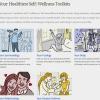
… Make better health your resolution all year round. You can learn simple ways to prevent disease and improve your relationships, emotional well-being, physical health, and surroundings. Check out NIH’s “ Your Healthiest Self: Wellness Toolkits ” for science-based health tips in five different areas. Each area has checklists of tips you can …
… are studying the long-term consequences of early life difficulties. And they’re looking for ways to protect kids from the health effects. “Normal stressors, or stressful experiences, … who face early life difficulties have health issues later on. Positive life experiences and relationships can also shape youth outcomes. Safe, stable, and trusting relationships can help … The home visits also aim to improve family challenges. Examples include increasing family communication or reducing parental depression. “If parents are depressed, they may not be able to …
… of DNA you inherit from your parents that define features, like eye color or your risk for certain diseases.] found in dogs are also found in humans. Because we share so much, it’s not surprising that health-related discoveries in people can lead to better medical care for dogs. Likewise, studies of dog biology can lead to better understanding … with people and other animals often had worse health outcomes. “These are interesting relationships, but it’s important to note that we don’t yet know what is causing what,” Promislow …
… you do can affect feelings of depression. The findings suggest that physical activity may improve your mood and sleep. Physical activity can help improve your health and quality of life. Not getting enough can increase your risk for some diseases and mental health issues. A research team looked at the relationship between … and I are currently conducting additional studies to understand these complex interactions better,” says Dr. Kathleen Merikangas, a mental health researcher at NIH. …
… may turn to medicine to find relief. But how do you know it was the drug that made you feel better? Sometimes, when you expect a treatment to work, it will. This phenomenon is called the placebo effect. Scientists are looking for ways to harness this effect for medical treatments. A placebo is an inactive substance or … someone else get relief from a treatment can make it more effective. For these reasons, good communication between patients and health care providers is an essential part of treatment. …
… the way they should. CKD may eventually lead to kidney failure. The most common blood test for CKD measures a protein called creatinine. Doctors use the amount of creatinine to estimate … understood. Formulas for kidney function take these differences into account. This helps improve the accuracy of the test for Black Americans. However, there’s a lot of diversity among … study participants. The study found that using cystatin C levels to estimate kidney function improved accuracy when race was not included. The addition of cystatin C may help reduce racial …
… the age of 75, about half have hearing loss. Not being able to hear well can make it hard to communicate. That can affect relationships with loved ones, friends, and coworkers. A new study shows that women who have a …
… be key to good health. Socially connected people tend to live longer. They’re at lower risk for serious health problems. Social bonds are also linked to our mental health, eating habits, … factors can contribute to a person feeling lonely. These include the quality of your personal relationships, your community, and society in general. Your personal health, life stage, and … with others. But they can also expose us to harms like bullying. Scientists are working to better understand the links between social bonds and our health. And they’re looking for ways to …
Share Our Materials:
Reprint our articles and illustrations in your own publication. Our material is not copyrighted. Please acknowledge
NIH News in Health
as the source and send us a copy.
For more consumer health news and information, visit
health.nih.gov.