
A monthly newsletter from the National Institutes of Health, part of the U.S. Department of Health and Human Services
Search

From A to Zika
… (CDC) reported a record number of tickborne-disease cases nationwide in 2017: almost 60,000. But new insect-borne diseases are still less frequent than some other better-known …

Pain in the Ear
… blocked. If the pain won’t go away or your child has fluid coming out of their ear, you should visit a doctor. Ear infections can also make a child fussy, cause a fever, or create trouble …

Keep Your Mouth Healthy
… tooth decay and gum disease by brushing daily with fluoride toothpaste and flossing. Also visit the dentist regularly for a cleaning and checkup. Another common problem for older adults …
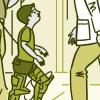
Bionic Movements
… exoskeleton changes the way the children walk by helping them straighten their knees at key points during the walking cycle. While the exoskeleton can make walking easier, children must be …

Dealing with Dementia
… (Lewy bodies are abnormal protein clumps in brain cells.) Dementia in people under age 60 is often caused by a group of brain diseases called frontotemporal disorders. These conditions …

Healthy Movements
… use “motion capture” tools to study how people move. Reflective markers—about the size of coins—are attached to the skin or clothing over people’s joints and muscles to make it easy to … “We’ve shown that we can use this information to reduce the relative risk of an ACL injury by 60-65%,” says Hewett. Motion-tracking tools are also being used to learn how older people might …

Feeling Out of Joint
… is processed have been tied to gout. For osteoarthritis, Jordan estimates that up to 30% to 60% of your risk may lie in the genes you inherited from your parents. “The tricky part, though, …

Keeping Your Gut in Check
… and repair. With such a long GI highway, it’s common to run into bumps in the road. About 60 to 70 million Americans are affected by digestive diseases, like gastroesophageal reflux …

Focus on Your Feet!
… and make it hard to move through the world.” Your feet are surprisingly complex. Each foot has 26 bones, 33 joints, and a network of nerves and blood vessels. Your feet also have more than 100 … to their feet. Diabetes affects about one in 10 Americans. Most people with diabetes—about 60% to 70%—develop nerve problems. These can range from mild to severe. Diabetic nerve damage, or …

Don’t Just Sit There!
… level. You might exercise at moderate intensity for 30 minutes, 5 days a week, or try 45 to 60 minutes, 3 days a week. If your goal is to exercise for a half hour a day, you might break …
NIH Office of Communications and Public Liaison
Health and Science Publications Branch
Building 31, Room 5B52
Bethesda, MD 20892-2094
Contact Us:
nihnewsinhealth@od.nih.gov
Phone: 301-451-8224
Share Our Materials: Reprint our articles and illustrations in your own publication. Our material is not copyrighted. Please acknowledge NIH News in Health as the source and send us a copy.
For more consumer health news and information, visit health.nih.gov.
For wellness toolkits, visit www.nih.gov/wellnesstoolkits.