A monthly newsletter from the National Institutes of Health, part of the U.S. Department of Health and Human Services
Site Menu
NIH Websites Are Changing
NIH is moving the launch of its new website to the fall to ensure the best possible experience for everyone who relies on our websites for health information, research, funding opportunities, and other resources.
… in large part on our surroundings. Researchers are studying how we can protect lung health by improving our environment and lifestyle choices. NIH funds research to understand how genes and the environment affect lung disease. The studies are looking for new ways to prevent and treat lung disease. Some studies have found that long-term exposure …
… of arthritis. They’ve also made significant strides in developing effective new treatments for many forms of the disease. What exactly is arthritis? “Arthr” means joint, and “itis” means … the alignment of your joints. For severe cases of osteoarthritis, scientists have developed improved surgeries to replace knees and hips. Another common type of arthritis is gout. Gout … get treatment as early as possible.” Researchers continue to explore what causes arthritis. A better understanding of the factors involved might lead to new treatment approaches. …
… Getting your period is a fact of life for most women. But every woman’s period is different. So how do you know if yours is causing … it, it’s part of being a woman,’” he explains. “But there are treatments available that can improve your health and your quality of life.” … Finding the Cause … It can be hard for doctors … worked,” he explains. However, it doesn’t cure chronic pelvic pain for everyone. … Looking forBetter Options … NIH-funded researchers continue to look into new ways to detect, treat, and …
… a dermatologist at NIH. While some children may outgrow eczema, others will have the disease for life. The cause of eczema is unknown. But skin microbes—bacteria, fungi, and viruses—may play … found on healthy skin may help. In a small preliminary study, children and adults with eczema improved after using a spray that contained a specific kind of healthy bacteria. Research like … says. While some people prefer petroleum jelly-based products, other people find they have better results with cream-based lotions. “But because of the tendency for a lot of these patients …
… ligaments and tendons that help your joints move. They also provide structure and flexibility for body parts, such as your skin and blood vessels. Damage to your connective tissue can cause … The effects of these conditions can range from mild to severe. Researchers are looking forbetter ways to diagnose and treat conditions that lead to connective tissue damage. Getting …
… signals all at once. This surge of brain activity is called a seizure. Any seizure is a cause for concern. Epilepsy is a condition in which you have repeated seizures. But not all seizures … in about one-half of people diagnosed with the disorder. NIH researchers are working to find better ways to diagnose and treat it. … Unraveling Symptoms … Anything that disturbs the pattern … helped develop a gene therapy to treat Dravet syndrome. Their gene therapy showed promise forimproving seizures in an animal model they developed with NIH funding. Now, a private company is …
… For over 30 years, doctors have recommended the DASH diet to help people reduce high blood pressure. Studies have repeatedly shown that the DASH eating plan can improve heart health. The DASH diet seems to have other health benefits. But its effects on blood … Hopkins University. “But this is the first time a controlled study has shown a significant improvement in glucose control as well.” …
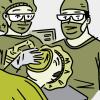
… under general anesthesia. It’s a combination of drugs that’s made surgery more bearable for patients and doctors alike. General anesthesia dampens pain, knocks you unconscious and keeps … says Dr. Emery Brown, an anesthesiologist at Massachusetts General Hospital in Boston. Things improved more than 150 years ago, when a dentist in Massachusetts publicly demonstrated that the … the results of the largest study to compare different techniques. Brain monitoring did no better than standard monitoring in preventing anesthesia awareness. Addiction to alcohol or drugs …
… most people nationwide, you’ve spent more than half of your waking hours sitting or inactive for long stretches of time—at work, at school, in the car or watching TV or another type of … a wide range of medical problems. Studies have found that any time you get up and move, you’re improving your chances for good health. “Some of us are sort of forced into sedentary lifestyles … as fat. The best way to raise your metabolism is simply by moving. The more you move, the better. A new study led by NIH’s Dr. Steven Moore looked at data on more than 650,000 adults, …
… We’ve all heard that exercise is good for you. Did you know that it’s as true for older people as it is for any age group? You’re never too old to get moving, get stronger and improve your health. Fitting exercise and physical activity into your day can enhance your life …
Share Our Materials:
Reprint our articles and illustrations in your own publication. Our material is not copyrighted. Please acknowledge
NIH News in Health
as the source and send us a copy.
For more consumer health news and information, visit
health.nih.gov.