A monthly newsletter from the National Institutes of Health, part of the U.S. Department of Health and Human Services
Site Menu
NIH Websites Are Changing
NIH is moving the launch of its new website to the fall to ensure the best possible experience for everyone who relies on our websites for health information, research, funding opportunities, and other resources.
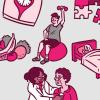
… rewards from regular physical activity. As you get older, reduced mobility can raise the risk for disease, disability, and even death. Regular physical activity offers known health benefits … disability by 18% compared to the education group. Physical activity participants were better able to maintain their ability to walk without assistance for about a quarter of a mile. …
… disease, the most common cause of dementia. Although age is the greatest risk factor for dementia, it isn’t a normal part of aging. Some people live into their 90s and beyond with no … no studies have shown that clearing the brain of amyloid protein can actually translate into improved symptoms.” Different types of drugs are being used to treat Alzheimer’s disease, Parkinson’s dementia, and certain other forms of dementia. These medications may improve symptoms, but none can halt or reverse progressive damage to the brain. “In contrast, if …
… from pregnancy have been rising in the U.S. in recent years. Knowing the symptoms to look out for and getting care quickly can help keep both mothers and their babies safe. … Warning Signs … … you can look for resources at HealthCare.gov (HHS) . Catov’s team is testing programs to improve mothers’ health in the year after birth. They’re looking for ways to manage high blood … training in how to measure and manage their blood pressure. The study will show if the program improves women’s blood pressure a year after giving birth. “If we can help them get back on track …
… and gentle coughs. A week or two later, a severe coughing phase begins. This phase can last for many weeks. “Pertussis is sometimes called the 100-day cough. The illness can last that … vaccine is given as part of a combination vaccine. The one given to babies is called DTaP, for diphtheria, tetanus, and pertussis. The booster shot for older children and adults is called … fades more quickly than the original whole-cell vaccine. Researchers are looking for ways to improve the current vaccine. But, Edwards says, “when the current vaccines are given as …
… of older adults.] who oversees research on aging and health. “Exercise is especially important for lengthening active life expectancy, which is life without disease and without physical and … changes may make it tempting to move less and sit more. But doing that can raise your risk for disease, disability, and even death. It’s important to work with a doctor to find the types … NIH’s Go4Life website has tips to help older adults get and stay active. Another sure way to improve your chances for a longer, healthier life is to shed excess weight. “Being obese—with a …
… against harmful microbes in food. Certain things you may be doing can help bad microbes grow better than the good ones. Sugary foods and drinks feed some microbes and help them increase in … destroys the surface of your teeth. The more sugar in your diet, the more fuel is available for these microbes to build up plaque and damage teeth. “It’s more productive to think about the …
… often told. The idea that a teen could be thinking about ending that life might be hard for their friends, families, or other people in their community to believe. But the risk of … Experts don’t know why this rate has been rising. But NIH-funded researchers are working on better ways to find and help teens who are thinking of suicide. “There are some very effective …
… These gene changes, called mutations, help microbes survive and spread. Some make it possible for bacteria or viruses that once only infected animals to infect people. Bacteria and viruses … a disease to a new location.” Weaver and his colleagues are studying all of these factors to better understand what areas might be at risk for new disease outbreaks. They also want to …
… from biting people and keep those who are bitten from getting sick. … Blocking Disease … For decades, researchers have been trying to develop vaccines to protect people against … from spreading, they need to be used by everyone in an area. Researchers want to develop better ways to prevent mosquito bites. But first they have to figure out how mosquitoes sense …
… practices—interact. It boosts wellness and protects you from risks to your well-being. For many people, these risks are compounded by hardship and discrimination,” adds Dr. Lisa … is key to what underlies resilience. And a healthy body is going to deal with stress much better,” says Bergeman. Other tools are emotional, like expressing your feelings rather than …
Share Our Materials:
Reprint our articles and illustrations in your own publication. Our material is not copyrighted. Please acknowledge
NIH News in Health
as the source and send us a copy.
For more consumer health news and information, visit
health.nih.gov.