
A monthly newsletter from the National Institutes of Health, part of the U.S. Department of Health and Human Services
Search

Medical Robots to the Rescue
… Ryan Sochol, a mechanical engineer at the University of Maryland. But medical robots can come in many shapes and sizes. Sochol and his colleagues are creating tiny flexible robots to improve … these robotic devices are still in the research and development phase. They’re not yet ready for general use. But some may become available within the next five to ten years. Robots usually … demand during the procedure to help surgeons reach those hard-to-access areas,” he says. Other NIH-supported scientists are developing soft robotic techniques to improve heart surgery, bowel …

Advances in Childhood Cancer
… they could get something as scary as cancer. But they can. Every year, more than 10,000 kids in the U.S. will get a diagnosis of cancer. Some cases are caused by changes in certain … of DNA you inherit from your parents that define features, like your risk for certain diseases.] that are passed from parents to their children. But these are rare. The … of cancer that we see in children,” says Dr. Nita Seibel, a childhood cancer specialist at NIH. These are cancers that start in certain types of blood cells. Next most common are cancers …

To Heal a Wound
… You’ve likely had countless cuts and scrapes in your life. Normally, when you get a small skin wound, your body can repair it quickly. But … tear in the skin can have trouble healing. That can lead to pain and distress and pose a risk for dangerous—or even deadly—infections. Wounds that don’t heal for three months or more are … seal that wound as quickly as possible,” says Dr. Maria Morasso, a skin biology researcher at NIH. This normally involves an orderly series of steps. First, a clot forms over the wound to …

Your Body’s Bugs
… Microscopic bugs called microbes can be found in your eyes, mouth, gut, skin, and everywhere else. But don’t be alarmed. Most of your microbes … digest food. They prevent dangerous infections in your organs. And so much more. They’re vital for your health. This collection of microbes in your body includes bacteria, fungi, and viruses. … an [qtip:immune system|The body’s defense against germs and microscopic threats.] expert at NIH. “This is one way your microbiome prevents infection,” she says. Your immune system normally …

Safe Sleep for Baby
… should sleep on their back rather than their belly? Research has revealed many risk factors for sudden infant death, and sleep position is the most important one. Each year in the U.S., about 3,500 infants die suddenly and unexpectedly in their sleep. In about half of … those under 1 year of age,” explains Dr. Marion W. Koso-Thomas, a child health expert at NIH. Babies are most vulnerable to SIDS up to 4 months old. “One of the critical pieces to SIDS …
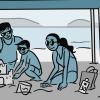
Sun and Skin
… so we can stay awake by day and sleep soundly at night. Getting too little sun, especially in winter months, can leave some people prone to a form of depression known as seasonal affective disorder. Sunlight also helps our skin make vitamin D, which is needed for normal bone function and health. Yet sunlight can also cause damage. Sunlight travels to … have, the earlier your skin ages,” says Dr. Barnett S. Kramer, a cancer prevention expert at NIH. Your skin does have ways to prevent or repair such damage. The outermost layer of skin …

The Skinny on Fat
… Fat is an essential nutrient for our bodies. It provides energy. It helps our guts absorb certain vitamins from foods. But … because of concerns about [qtip:saturated fats|Fats that are solid at room temperature; found in butter, lard, full-fat milk and yogurt, full-fat cheese, and high-fat meat.], explains Dr. … of their diet, Sacks says. You don’t need to avoid healthy fats to lose weight, he adds. In an NIH-funded study Sacks led, called the POUNDS LOST trial, people who ate higher-fat or lower-fat …
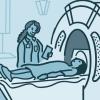
Medical Scans Explained
… you to know what to ask about before getting an imaging test. … X-Rays … The first revolution in seeing into the body came with X-rays. They have been used in the clinic for more than 120 years. “X-rays are still used every day because they can do a lot,” says Dr. Kris Kandarpa, an imaging expert at NIH. They’re useful for looking at bones and finding problems in certain types of tissues, like …

To Fast or Not to Fast
… periods when food was either scarce or completely lacking, says Dr. Valter Longo, an NIH-funded longevity researcher at the University of Southern California. “So, they were forced … problems. Researchers have started looking at whether fasting can have potential benefits for some people. … Going Without Food … Fasting diets mainly focus on the timing of when you can eat. There are many different fasting diets, sometimes called “intermittent fasting.” In time-restricted feeding, you eat every day but only during a limited number of hours. So, you …

Sound Health
… how you think, feel, move, and more,” says neuroscientist Dr. Robert Finkelstein, who co-leads NIH’s music and health initiative . “Today, modern technologies are helping researchers learn … information it receives, including sound and music. “Sound is an important and profound force in our lives,” explains Northwestern University neuroscientist Dr. Nina Kraus. “The more we … exercise in people with Parkinson’s disease. There’s also evidence that music may be helpful for people with other health conditions, including Alzheimer’s disease, dementia, traumatic brain …
NIH Office of Communications and Public Liaison
Health and Science Publications Branch
Building 31, Room 5B52
Bethesda, MD 20892-2094
Contact Us:
nihnewsinhealth@od.nih.gov
Phone: 301-451-8224
Share Our Materials: Reprint our articles and illustrations in your own publication. Our material is not copyrighted. Please acknowledge NIH News in Health as the source and send us a copy.
For more consumer health news and information, visit health.nih.gov.
For wellness toolkits, visit www.nih.gov/wellnesstoolkits.