
A monthly newsletter from the National Institutes of Health, part of the U.S. Department of Health and Human Services
Search

Tick Tock: Your Body Clocks
… at mealtimes, and sleepy at night. Keeping your body’s daily cycles, or circadian rhythms, in sync is important for your health. “Circadian rhythms are big influencers in the body,” explains NIH’s Dr. Michael Sesma, an expert in circadian biology. “They affect almost every part of your …

Seeking Allergy Relief
… A change in season can brighten your days with vibrant new colors. But blooming flowers and falling leaves … resulting allergic reactions in the nose are called allergic rhinitis, or hay fever. Allergy is one of the most common long-term health conditions. “Over the past several decades, the prevalence of allergies has been increasing,” says Dr. Paivi Salo, an allergy expert at NIH. “Currently, airborne allergies affect approximately 10-30% of adults and 40% of children.” …

Managing Multiple Sclerosis
… symptoms depend on which parts of the brain and spinal cord are affected. A typical symptom is blurry vision in one eye. It may develop over a day or two. It may be painful to move the eye. Or, you may have … be greater. “We know that genes play a major role,” says Dr. Daniel S. Reich, an MS expert at NIH. Research shows that hundreds of genes are involved. Most of these genes are related to the …
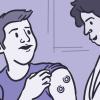
The Fungus Among Us
… some fungi can cause skin problems, lung infections, and other diseases. Fungi typically live in soil and on plants. But they can also thrive indoors. They can float through the air just like … “And the ones that are available tend to have a lot of side effects,” Andes explains. This is because fungal cells are similar in many ways to human cells. “So it’s very hard to find an antifungal that’s able to kill the fungus without also hurting human cells,” he says. NIH-funded researchers are working on developing new antifungal drugs with fewer side effects. …
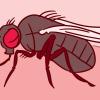
The Mighty Fruit Fly
… Fruit flies can be a major nuisance. How can you help but be annoyed when they hover in swarms over fruits, around picnics, and in garbage? But before you give them a swat, take a … have gone to scientists for their studies of flies. One advantage of studying fruit flies is that they grow from egg to adult in only two weeks,* so it’s easy to study several … to learn more about how the genes work and what they do. By studying flies, for example, one NIH-supported research team discovered more than 40 genes that cause rare genetic diseases in …

Sound Check
… many parts of your body to work together. Your brain thinks of ideas. Your lungs move air in and out. Your vocal cords vibrate. Your mouth and nose help shape sound. “Our whole body … a biomedical engineer at Emory University and Georgia Institute of Technology. Clifford’s team is trying to use speech patterns and facial expression changes to catch depression early in … if needed. It could also provide early warning that someone’s health is declining. Other NIH-funded research teams are testing speech analysis to screen for additional mental health …

Stopping Middle-Age Spread
… If you’re an adult in the U.S., you can expect to gain 10 to 25 pounds between your 20s and your 40s. Starting … you do may not have the same effect as before. It’s not necessarily a sign that something is wrong. This weight gain in middle age—known as “middle-age spread”—is a natural consequence of … you need to grow, move, and stay healthy.] … tends to slow down as you get older,” says NIH’s Dr. Rafael de Cabo, an expert on aging. “But your appetite and your food intake do not. So, …

Discovering VEXAS
… Scientists recently discovered a new disease, called VEXAS, which can appear suddenly in midlife. It’s characterized by repeated attacks of [qtip:inflammation|The heat, swelling and … to injury or infection.], often without a clear cause. The inflammation, researchers found, is caused by the body’s disease defense system, or immune system, attacking its own cells. … blood cancers are being tested for treating the effects of VEXAS on blood and bone marrow. NIH is currently recruiting participants for a clinical trial to see if bone marrow transplants …

Focusing on ADHD
… of a developmental disorder called attention deficit hyperactivity disorder, or ADHD. ADHD is a common brain condition in children. Nationwide, more than 1 in 10 kids ages 4 to 17 have been diagnosed with ADHD. Many … the community,” says Dr. Benedetto Vitiello, a psychiatrist and child mental health expert at NIH. “The diagnosis is made because the level of hyperactivity or lack of concentration is …
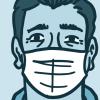
Face Masks and COVID-19
… even protect against COVID-19? “Yes, absolutely,” says Dr. Adriaan Bax, a biophysicist at NIH. He has been testing how well different types of masks work. Masks, he explains, can help … Speaking loudly or singing produces even more droplets. Stopping droplets at the source is the easiest way to prevent the virus from spreading through the air. Wearing a mask can play a … nearly all droplets produced during speech. After droplets leave someone’s mouth, the water in them quickly evaporates. This causes the droplets to shrink. These shrunken droplets are …
NIH Office of Communications and Public Liaison
Health and Science Publications Branch
Building 31, Room 5B52
Bethesda, MD 20892-2094
Contact Us:
nihnewsinhealth@od.nih.gov
Phone: 301-451-8224
Share Our Materials: Reprint our articles and illustrations in your own publication. Our material is not copyrighted. Please acknowledge NIH News in Health as the source and send us a copy.
For more consumer health news and information, visit health.nih.gov.
For wellness toolkits, visit www.nih.gov/wellnesstoolkits.