
A monthly newsletter from the National Institutes of Health, part of the U.S. Department of Health and Human Services
Search

Keep Your Mouth Healthy
… Oral health is important for people of all ages. But the simple routine you learned as a kid—brush your teeth … become more of a challenge as you get older. Among adults ages 75 and up, about 1 in 4 has lost all natural teeth, largely because of gum disease and tooth decay. You can take … are more prevalent at certain ages,” says Dr. Dena Fischer, a dental health expert at NIH. The 2 most common oral health problems are tooth decay ([qtip:cavities|Small holes in teeth …

Taking on Teeth Grinding and Clenching
… Do you wake up with a tired or sore jaw in the morning? It could be a sign that you’re grinding or clenching your teeth at night. Over … until they’re told by a bedtime partner,” explains Dr. Dena Fischer, a dental health expert at NIH. You can grind your teeth during the daytime, too—although clenching your jaw is more common. Some experts think of daytime and nighttime bruxism as separate conditions. They …

Recognizing Jaundice
… babies have a yellowish tint to their skin or the whites of their eyes right after birth. This is called jaundice. It can happen to adults, too. For adults, it can be a sign of a serious … harmful substances. If something interferes with this process, toxic compounds can build up in your body. Jaundice happens when you have too much of a compound called bilirubin. Bilirubin … disease should limit alcohol use to prevent further liver damage. Goldberg is one of several NIH-funded researchers studying whether cholesterol-lowering drugs called statins can slow or …

Fishing for Clues to Human Health
… The difference between a little fish and a human may seem enormous. But in some ways, fish and people are surprisingly similar. That’s why scientists around the world … use similar processes for eating, moving, fighting germs, and more. And fish and people change in very similar ways from a fertilized egg to a developing embryo. In recent decades, zebrafish … new drugs. “Zebrafish are a good model for humans in many ways,” says Dr. Brant Weinstein, an NIH expert in zebrafish biology. “We have a lot of the same genes as zebrafish. We have a lot of …

Recognizing POTS
… activities, like attending work or school,” says Dr. Cheryl L. McDonald, who helps oversee NIH’s POTS research programs. “Some people even require the use of a wheelchair because they can’t stand or walk for long periods.” POTS is an abbreviation for Postural Orthostatic Tachycardia Syndrome. Postural means it’s linked to … raise blood pressure or reduce heart rate. Compression socks can help keep blood from pooling in the legs. Exercise training and maintaining a regular sleep schedule may also help. Many …

Pregnancy Check-Ups
… Life is busy before a baby arrives. There are many things to do to prepare. One of the most important … is fundamental for shaping the lives of women and their children,” says Dr. Monica Longo, an NIH expert on prenatal health. Longo cares for women with high-risk pregnancies. Such women have … you’ll need to start regular prenatal visits. Most women have check-ups about once a month in the beginning. Then, they go more often later in the pregnancy. During a prenatal visit, your …
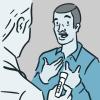
To Screen or Not to Screen?
… problems. They’re done before you have any signs or symptoms of the disease. They come in many forms. Your doctor might take your health history and perform a physical exam to look for … just simply get screening tests,” says Dr. Barnett S. Kramer, a cancer prevention expert at NIH. “Patients should be aware of both the potential benefits and the harms when they’re choosing … long before you would have. Or find a disease that never would have caused a problem. This is called overdiagnosis. Some cancers, for example, never cause symptoms or become …

Sore, Scratchy Throat?
… painful feeling when you swallow, talk, or even just breathe. Sometimes, a sore throat is little more than a nuisance. But it can also be a sign of serious infection. So how do you … things can trigger a sore throat, explains Dr. Alison Han, an infectious disease expert at the NIH Clinical Center. “It can be an … [qtip:allergen|Substance that produces an allergic reaction when a person comes in contact with them, like pollen or dust.]. … It can be an infection, like a virus or bacteria. …

Is It Flu, COVID-19, Allergies, or a Cold?
… flu can be difficult because the symptoms overlap so much,” explains Dr. Brooke Bozick, an NIH expert on respiratory diseases that affect the lungs. Flu and COVID-19 are caused by different viruses that can be spread among people. Flu is caused by the influenza virus. COVID-19 is caused by SARS-CoV-2. Both can give you a fever, … days after infection, although this can range from 2 to 14 days. One telling sign of COVID-19 in some cases is loss of smell or taste. But because of other similar symptoms, there’s really …

Cold, Flu, or Allergy?
… You’re feeling pretty lousy. You’ve got sniffles, sneezing, and a sore throat. Is it a cold, flu, or allergies? It can be hard to tell them apart because they share so many … that you don’t need, that aren’t effective, or that might even make your symptoms worse,” says NIH’s Dr. Teresa Hauguel, an expert on infectious diseases that affect breathing. Cold, flu, and … or allergen, which is something you’re allergic to.” If you have allergies and breathe in things like pollen or pet dander, the immune cells in your nose and airways may overreact to …
NIH Office of Communications and Public Liaison
Health and Science Publications Branch
Building 31, Room 5B52
Bethesda, MD 20892-2094
Contact Us:
nihnewsinhealth@od.nih.gov
Phone: 301-451-8224
Share Our Materials: Reprint our articles and illustrations in your own publication. Our material is not copyrighted. Please acknowledge NIH News in Health as the source and send us a copy.
For more consumer health news and information, visit health.nih.gov.
For wellness toolkits, visit www.nih.gov/wellnesstoolkits.