A monthly newsletter from the National Institutes of Health, part of the U.S. Department of Health and Human Services
Site Menu
NIH Websites Are Changing
NIH is moving the launch of its new website to the fall to ensure the best possible experience for everyone who relies on our websites for health information, research, funding opportunities, and other resources.
… the facts, you can have an open conversation with your child about the risks. You’ll also be better able to spot signs of a problem with opioids. NIH has developed a guide to help you begin … risks of misusing opioids, including the danger to a developing brain. Set clear expectations for your child about avoiding opioids and other drugs. And work to keep those channels of communication open. Having this important conver-sation can help kids make better decisions. …
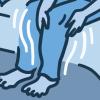
… also known as RLS. RLS is caused by problems with the way the nerves in the brain and body communicate with each other. These problems result in a strong, sometimes overwhelming urge to … of DNA you inherit from your parents. They define features like your risk for certain diseases.] appear to play some role in who’s at risk. Symptoms may be mild and not … like sitting or lying down. The third is that discomfort is relieved by movement. “People feel better as soon as they get up and walk around,” Earley says. Fourth, symptoms get worse …
… Everyone matures physically at their own pace. While there is a normal age range of 8 to 13 for girls and 9 to 14 for boys, some children may start developing earlier or later. Parents can … can reassure young people that this is normal,” Pfeifer says. “It can also open the lines of communication.” Children who go through puberty early may develop health problems. NIH researchers are looking into what contributes to early-onset puberty, so they can better understand how to prevent it. … How Puberty Starts … Puberty kicks off in the brain. A …
… Abuse can be difficult to see, especially when it’s in your own relationship. It can start slowly, and it’s not always physical. You may not realize that the small comments a loved one makes to you are doing harm. You may even make excuses for them. They’re stressed from work or the pandemic. But abuse takes many forms. It can be … to build healthy relationship skills. It’s important to start early. People who have violent relationships as teens are more likely to have them as adults. Dr. Jeff Temple, an expert on teen …
… We all have trouble from time to time managing strong feelings or relationships. But for people with borderline personality disorder (BPD), these are a constant …
… They also perform many functions in cells. And when released into blood, they help cells communicate. In a new study, scientists found that certain proteins in the blood can predict a … a few years. Those predicted by these proteins to be younger than they were also performed better in mental and physical tests. The researchers found that proteins in the blood changed … ages of 34, 60, and 78. Some of the proteins that changed are linked to age-related diseases. For example, proteins associated with heart disease and Alzheimer’s disease were found at 60 and …
… Most infants are screened for hearing loss before they leave the hospital. This helps doctors detect any hearing problems early and start treatment. Children with hearing loss who get help early develop better language skills than those who don’t. If your baby’s hearing isn’t tested at the hospital, … has hearing loss, various tools can help. These include hearing aids, cochlear implants, and communication approaches. Learn more about infants and hearing loss . …
… have found that sex and social factors can make a difference when it comes to your risk for disease, how well you respond to medications, and how often you seek medical care. That’s why … groups understand, experience, and express gender. Because gender influences our behaviors and relationships, it can also affect health. … Influences on Health … — “Sex and gender play a role … fatigue, and pain in the back, shoulders, and jaw. Knowing about such differences can lead to better diagnoses and outcomes. Men and women also tend to have different responses to pain. …
… Technology can be especially valuable for people in remote areas or places with few medical professionals. Using portable devices, … care. NIH researchers have been developing new ways to help treat patients where they live. For example, they’ve designed devices that can analyze blood samples for patients at home. One special device can even detect cancer remotely. It snaps to a …
… neuroscientist Dr. Nina Kraus. “The more we exercise our sound processing in the brain, the better the brain becomes at making sense of sound and the world around us. Music does this more … exercise in people with Parkinson’s disease. There’s also evidence that music may be helpful for people with other health conditions, including Alzheimer’s disease, dementia, traumatic brain … strengths and positive ways to cope, remain connected with family and friends, and improvecommunication during a challenging time,” Robb explains. … Music in Your Life … Music can offer …
Share Our Materials:
Reprint our articles and illustrations in your own publication. Our material is not copyrighted. Please acknowledge
NIH News in Health
as the source and send us a copy.
For more consumer health news and information, visit
health.nih.gov.