
A monthly newsletter from the National Institutes of Health, part of the U.S. Department of Health and Human Services
Search

Avoiding Anemia
… called anemia. Anemia is a common blood disorder that many people develop at some point in their lives. Many types of anemia are mild and short term. But the condition can become serious if left untreated for a long time. The good news is that anemia often can be prevented and easily corrected by getting enough iron. Anemia … need extra iron during pregnancy. Dr. Harvey Luksenburg, a specialist in blood diseases at NIH, says that if anemia isn’t treated during pregnancy, women can give birth to iron-deficient …

Noise Complaints
… people hear these noises for a few hours. Others may hear them for a lifetime. This condition is called tinnitus. About 10% of U.S. adults have experienced tinnitus that lasted for at least five minutes in the past year. The noise can be soft or loud, high pitched or low pitched. You may hear it in … ear to the brain, called the auditory nerve. His team hopes this can help reduce tinnitus. To search for studies you can join to help advance tinnitus research, visit clinicaltrials.gov . …
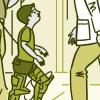
Bionic Movements
… the capability of the anatomy that’s missing now,” says Dr. Nick Langhals, who oversees NIH-supported prosthetic engineering research. This fast-moving research aims to improve people’s … are not as easy to learn how to use. To close the device, you contract the remaining muscles in your arm. An electrical sensor placed over those muscles detects the contraction and tells the … are now in development. If you’d like to find a clinical study to help test one, you can search for one in clinicaltrials.gov, a database of both NIH-supported and other studies around …

Painful Joints?
… Arthritis is an [qtip:inflammation|Swelling and irritation caused by the body’s protective response to … common than rheumatoid arthritis. Osteoarthritis is caused by wear and tear on your joints. In rheumatoid arthritis, your [qtip:immune system|The system that protects your body from … osteoarthritis,” explains Dr. Michael M. Ward, who oversees rheumatoid arthritis research at NIH. Your joints may appear red and feel warm. Pain and stiffness may be worse after you wake up …

Radon Risk
… on it. You might not be able to see or smell radon, but it can still harm you—slowly, and in ways that you can’t detect. Radon is a colorless, odorless, radioactive gas. It comes from the … of being exposed accumulate over time so that it may take many years for disease to appear. NIH-funded scientists have been working to better understand the relationship between radon exposure and cancer risk. The good news is that many radon-related lung cancer deaths can be prevented. But testing is the only way …

Dealing with Dementia
… time to see a doctor. These could be signs of a condition known as dementia. Dementia is a brain disorder that most often affects the elderly. It’s caused by the failure or death of nerve cells in the brain. By some estimates, up to half of people ages 85 and older may have Alzheimer’s … symptoms that can be caused by many different diseases,” says Dr. Sanjay Asthana, who heads an NIH-supported Alzheimer’s disease center at the University of Wisconsin. “Symptoms of dementia …

Stop the Spread of Superbugs
… have helped to control and destroy many of the harmful bacteria that can make us sick. But in recent decades, antibiotics have been losing their punch against some types of bacteria. In … are no longer responding to antibiotics, even the newer ones,” says Dr. Dennis Dixon, an NIH expert in bacterial and fungal diseases. Scientists have been trying to keep ahead of newly … bacteria. Their findings could point the way to innovative new treatments. While scientists search for ways to beat back these stubborn bacteria, you can help by preventing the spread of …
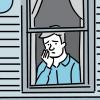
Worried Sick
… Anxiety is an uneasy feeling that something may harm you or a loved one. This feeling can be normal and … and ready for action. But sometimes anxiety can linger or become overwhelming. When it gets in the way of good health and peace of mind, it’s called an anxiety disorder. If you have an … illness—one they may carry into adulthood. “Everybody has anxiety,” says Dr. Daniel Pine, an NIH neuroscientist and psychiatrist. “The tricky part is how to tell the difference between …

See, Hear, Speak
… may feel prepared with a backpack loaded with crayons, pencils, and paper. But a good start in the classroom depends on more than just school supplies. Healthy hearing, vision, speech, and … start to catch up with them. They may have trouble focusing and flourishing in the classroom. NIH-funded scientists are searching for better ways to recognize and treat these types of … they’re just not hearing clearly,” she says. Screening for hearing loss in school-age kids is a familiar process. Children wear headphones and raise their hands as they hear a series of …

Chocolate Health Claims
… pick-me-up after a long day. You may have heard that dark chocolate has health benefits. But is that true or just wishful thinking? Small studies suggest that cocoa, an ingredient in chocolate, may have health benefits. It’s possible that certain nutrients in cocoa could … bars,” Baker says. Eating chocolate just isn’t the same, she explains. And there’s more bitter news. Because of the added sugar and cocoa butter, chocolate contains a lot of calories and …
NIH Office of Communications and Public Liaison
Health and Science Publications Branch
Building 31, Room 5B52
Bethesda, MD 20892-2094
Contact Us:
nihnewsinhealth@od.nih.gov
Phone: 301-451-8224
Share Our Materials: Reprint our articles and illustrations in your own publication. Our material is not copyrighted. Please acknowledge NIH News in Health as the source and send us a copy.
For more consumer health news and information, visit health.nih.gov.
For wellness toolkits, visit www.nih.gov/wellnesstoolkits.