
A monthly newsletter from the National Institutes of Health, part of the U.S. Department of Health and Human Services
Search
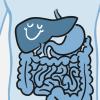
Your Liver Delivers
… drugs, viruses, and excess weight—can damage it. You may not even realize when your liver is struggling, because liver disease usually has no symptoms until the problem becomes severe. … of functions that keep you healthy,” says Dr. Jake Liang, a liver specialist and researcher at NIH. Your liver helps fight infections. It cleans your blood by getting rid of your body’s … network, we can combine the efforts and expertise of many clinical centers that specialize in rare childhood liver diseases.” Other NIH studies are focusing on an increasingly common type …

Autism Spectrum Disorder
… struggle more than most. For them, communicating with others can be very difficult. Autism is called a “spectrum” disorder because it’s not the same for everyone. Generally, people with autism both have difficulties with social communication and engage in repetitive behaviors. ASD can also affect learning and problem-solving abilities. But people … range of difficulties and need less support,” explains Dr. Lisa Gilotty, an autism expert at NIH. Scientists don’t know the exact causes of ASD. They’re working hard to understand how …
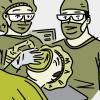
Waking Up to Anesthesia
… When you face surgery, you might have many concerns. One common worry is about going under anesthesia. Will you lose consciousness? How will you feel afterward? Is it … swig of whiskey,” says Dr. Emery Brown, an anesthesiologist at Massachusetts General Hospital in Boston. Things improved more than 150 years ago, when a dentist in Massachusetts publicly … 3 main stages: going under (induction), staying under (maintenance) and recovery (emergence). NIH-funded scientists are working to improve the safety and effectiveness of all 3. The drugs …
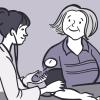
Blood Pressure Matters
… About 1 in 3 adults in the U.S. has high blood pressure, but many don’t realize it. High blood pressure … signs, yet it can lead to life-threatening conditions like heart attack or stroke. The good news is that high blood pressure, or hypertension, can often be prevented or treated. Early … or less. “Hypertension is defined as having an average blood pressure of above 140/90,” says NIH’s Dr. Lawrence Fine, who oversees research on the treatment and prevention of hypertension. …

Trouble With Touch?
… and can strengthen social bonds. It can also be altered by many health conditions. “Your skin is your largest sensory organ by far,” says Dr. Alexander Chesler, a touch researcher at NIH. “It encompasses your entire body. And the precision, accuracy, and speed at which it can … can affect your quality of life. Over the last decade, researchers have made major progress in understanding how touch works. They’re now using this information to help address pain and …

Connective Tissue Disorders
… can start to erode connective tissues. So can certain … [qtip:autoimmune diseases|Conditions in which the body’s disease fighting system mistakenly attacks and destroys the body’s own … all possible genetic factors that can lead to the condition. Researchers are continuing to search for the causes of connective tissue disorders. Gensemer, working with Dr. Russell Norris … Oro, a stem cell researcher at Stanford University. Oro and others are now working on a large NIH-funded project to make it easier to get stem cell therapies manufactured, so the treatment …

An Uptick in Ticks
… Warm weather might make you want to get outdoors and enjoy walks in the woods, picnics, gardening, and more. But tiny ticks also emerge when temperatures rise. … problems. Some tick bites have been linked to a severe allergy to red meat. There is good news, though—you can take steps to keep ticks from making you sick. And NIH-supported scientists are looking for better ways to diagnose, treat, and prevent tick-related …
Discoveries in Basic Science
… Science can be slow and unpredictable. Each research advance builds on past discoveries, often in unexpected ways. It can take many years to build up enough basic knowledge to apply what … how the basic biological processes work in the first place,” says Dr. Jon Lorsch, director of NIH’s National Institute of General Medical Sciences. “And of course, if you don’t understand how … the peer-review process at NIH’s scientific journal of environmental health research and news. Different experts evaluate the quality of the research. They look at the methods and how …
Shake it Off
… But a bad mood or major mood swings that go on too long may signal a bigger problem. The good news is that certain healthy habits can help you boost your mood. “Some people are more moody … Normal mood actually varies from person to person,” explains Dr. Carlos Zarate, chief of NIH’s mood disorders group. That’s because we all have different “temperaments,” or combinations … These are fairly stable over time. “Considerable research shows that people really differ in their basic temperament,” says Dr. Maria Kovacs, an NIH-funded psychologist at the University …
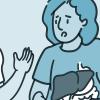
Consider Your Liver
… that the body needs to stay healthy,” says Dr. Marc Ghany, a liver researcher and clinician at NIH. “It also cleanses the body of toxins and breaks down substances that could be harmful to the … working even under stress. But over time, damage can build up and cause problems. The good news is you can take steps to keep your liver healthy. And many liver diseases can now be treated or even cured, thanks in large part to NIH-supported discoveries. … Spotting Liver Problems … There are many kinds of …
NIH Office of Communications and Public Liaison
Health and Science Publications Branch
Building 31, Room 5B52
Bethesda, MD 20892-2094
Contact Us:
nihnewsinhealth@od.nih.gov
Phone: 301-451-8224
Share Our Materials: Reprint our articles and illustrations in your own publication. Our material is not copyrighted. Please acknowledge NIH News in Health as the source and send us a copy.
For more consumer health news and information, visit health.nih.gov.
For wellness toolkits, visit www.nih.gov/wellnesstoolkits.