A monthly newsletter from the National Institutes of Health, part of the U.S. Department of Health and Human Services
Site Menu
NIH Websites Are Changing
NIH is moving the launch of its new website to the fall to ensure the best possible experience for everyone who relies on our websites for health information, research, funding opportunities, and other resources.
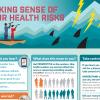
It seems like a new health risk is in the news every day. How do you know which risks are worth worrying about? NIH has created a one-page guide called, Making Sense of Your Health Risks, to help you put risks into perspective. A health risk is something that increases your chance of developing a disease. For example, getting too much sun on your skin may put you at higher risk for skin cancer. That doesn’t mean that you will definitely get skin cancer. You can take steps to lower your risk by protecting your skin from sun exposure. When you hear about a health risk, ask yourself…
Kids often struggle to pay attention or have too much energy. If these difficulties last a long time and cause problems in multiple situations, they might be signs of attention-deficit/hyperactivity disorder, or ADHD. ADHD makes it harder to learn and get things done. Researchers are finding new ways to help kids with ADHD—and their parents—gain skills to better manage symptoms. Some kids with…
Physical activity is one of the best things you can do for your health, but getting enough of it might not be just about willpower. Your neighborhood can play a bigger role than you might think. The streets, sidewalks, and nearby destinations around you can affect how much you move each day. Researchers are looking at what elements in neighborhoods encourage more activity. “A person’s surrounding…
Losing the ability to speak can make it difficult to express yourself. Many things can damage the parts of the brain and body that work together to produce speech. Researchers are testing new tools to bypass the damage and restore communication. Speech is a complicated process. Your brain must turn thoughts into words by firing electrical signals along nerve pathways to the muscles of the vocal…, Addressing Speech Loss, There are many conditions that can impact your ability to speak. Amyotrophic lateral sclerosis (ALS) is a progressive disease that weakens muscles and eventually leads to paralysis. Parkinson’s disease is a brain disorder that causes slowed movements, tremors, and stiff muscles. Other conditions like brain tumors, seizures, strokes, and traumatic brain injuries can affect the parts of the brain…, Bypassing the Body, BCIs let people control computers, robots, or other devices using brain signals. “We would not have been able to create our first successful BCI without the decade’s worth of deep investigation into how the brain works,” says Dr. Eddie Chang, a neurosurgeon at the University of California, San Francisco. Research from Chang’s lab led to the first implantable BCI that was able to decode speech.…, What’s Next?, While EEG devices are currently available commercially, right now, implanted speech BCIs are available only through clinical trials. People who might be eligible to participate include those with ALS, lasting stroke symptoms, a spinal cord injury, or paralysis. To search for a clinical trial, visit clinicaltrials.gov . “Our team and others have shown that people can use BCI devices on a day-to-…
Just as children learn in school, some of the cells that protect us from disease also need an education. Cells called T cells attend class in the thymus. The thymus teaches the T cells what to attack and what to leave alone to keep us healthy. Researchers are studying how the thymus trains these cells, with the goal of finding new ways to boost disease-fighting abilities. T cells are one of the…
Share Our Materials:
Reprint our articles and illustrations in your own publication. Our material is not copyrighted. Please acknowledge
NIH News in Health
as the source and send us a copy.
For more consumer health news and information, visit
health.nih.gov.