
A monthly newsletter from the National Institutes of Health, part of the U.S. Department of Health and Human Services
Search

Coping With Grief
… process grief and are learning more about healthy ways to cope with loss. The death of a loved one can affect how you feel, how you act, and what you think. Together, these reactions are … ways. Cultural beliefs and traditions can influence how someone expresses grief and mourns. For example, in some cultures, grief is expressed quietly and privately. In others, it can be … and actions that can get in the way of adapting to loss. They also focused on strengthening one’s natural process of adapting to loss. The studies showed that 70% of people taking part in …

Getting a Genetic Test
… you have symptoms of a disease, a genetic test may help with diagnosis. Genetic testing looks for changes in genes. It’s usually done in a lab using a blood sample. Thousands of genetic tests … in mind that such results may not mean that you’ll get that disease. Genetic counselors are one type of health professional who can help you understand the risks and benefits of genetic testing. Your doctor may refer you to one. They can help you decide whether to undergo testing. And they can help explain what test …

Comparing Heart Disease Treatments
… The study followed more than 5,000 patients with stable moderate to severe heart disease for about three years. The people were divided into two groups. One was given medications to control blood pressure, cholesterol, and chest pain (or angina) and …
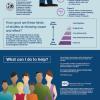
When Clinical Research Is in the News
… illness? How about a behavior, like too much sitting, that’s “linked” to health problems? Such news reports are often based on some type of clinical research, which is the study of health and … think critically about the health and research news you see and hear. NIH has developed a new one-page guide, … Why Do Researchers Do Different Kinds of Clinical Studies? … , … that outlines … In such trials, people are randomly assigned to either a “treatment” or a “control” group for comparison. Other clinical studies involve observing people to find associations or links. …

Easing Depression in Older Adults
… 60 and older, who had hard-to-treat depression. Participants were divided into three groups. One group added the drug aripiprazole (Abilify) to their prescribed antidepressant. The second … who switched to bupropion. “Often, unless a patient responds to the first treatment prescribed for depression, physicians follow a pattern in which they try one treatment after another until …

Living With Gout
… Gout is a common and painful type of arthritis (swelling in one or more of your joints). It usually first appears in a big toe or lower limb. But other … are treatable, especially if caught early. Gout is more common in men. It tends to first arise for them in middle age. Women usually develop gout only after menopause. Flares of gout often start suddenly at night, with intense pain that may wake you up. Usually, just one joint is affected. It may feel swollen, red, warm, and stiff. Flares usually get better …
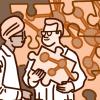
Discoveries in Basic Science
… we know about basic biology so far has come from studying organisms other than people. “If one wants to delve into the intricate details of how cells work or how the molecules inside the … mice. Computers can also help answer basic science questions. “You can use computers to look for patterns and to try to understand how the different data you’ve collected can fit together,” … the peer-review process at NIH’s scientific journal of environmental health research and news. Different experts evaluate the quality of the research. They look at the methods and how …
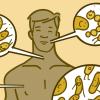
Your Body’s Bugs
… digest food. They prevent dangerous infections in your organs. And so much more. They’re vital for your health. This collection of microbes in your body includes bacteria, fungi, and viruses. … are starting to uncover ways to use microbes to improve your health. … Restoring Balance … One of the big jobs for our helpful microbes is to take up space. They live in places in the body …

Peanut Allergy Therapy Loses Effect After Stopping
… Peanut is one of the most common food allergies. Some studies show oral immunotherapy (OIT) can prevent … The researchers then stopped the therapy or reduced the dose to see if its effects lasted. One year later, only 13% of those who had stopped OIT could still tolerate peanut. And only 37% …

Blood Proteins Change Across the Lifespan
… Proteins are one of the main building blocks of the body. They hold skin, muscles, and bone together. They … ages of 34, 60, and 78. Some of the proteins that changed are linked to age-related diseases. For example, proteins associated with heart disease and Alzheimer’s disease were found at 60 and 78 years of age. The findings suggest it may one day be possible to identify people at greater risk of age-related disease with a blood test. …
NIH Office of Communications and Public Liaison
Health and Science Publications Branch
Building 31, Room 5B52
Bethesda, MD 20892-2094
Contact Us:
nihnewsinhealth@od.nih.gov
Phone: 301-451-8224
Share Our Materials: Reprint our articles and illustrations in your own publication. Our material is not copyrighted. Please acknowledge NIH News in Health as the source and send us a copy.
For more consumer health news and information, visit health.nih.gov.
For wellness toolkits, visit www.nih.gov/wellnesstoolkits.