
A monthly newsletter from the National Institutes of Health, part of the U.S. Department of Health and Human Services
Search

Personalized Medicine
… You’re one of a kind. It’s not just your eyes, smile, and personality. Your health, risk for disease, and the ways you respond to medicines are also unique. Medicines that work well for … and perform the other tasks that your body needs. These genetic instructions are written in varying patterns of only 4 different chemical “letters,” or bases. The same genes often differ … into the medical decisions they make,” says Dr. Rochelle Long, a pharmacogenomics expert at NIH. It’s becoming more common for doctors to test for gene variants before prescribing certain …

Update Your Doctor on Your Family’s Health
… other disorders. That’s why doctors usually ask about your family’s health the first time you visit. NIH-funded researchers across the country set out to learn how changes in family history might affect a patient’s cancer risk and the screening tests recommended by …

The Prostate Prognosis
… Most men probably don’t like thinking about their prostates, but it’s worth doing once in a while. Problems with the small gland are common in men past the age of 50. The good news is that most prostate conditions can be successfully treated. The prostate is about the size … Certain risk factors have been linked to prostate cancer—for example, eating a high-fat diet. NIH-funded scientists are now looking at how prostate cancer can be prevented. NIH also has many …
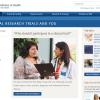
NIH Clinical Research Trials and You
Clinical research is medical research that involves people like you. Its goal is to determine if a new test or treatment works and is safe. Learn more about participating. See volunteer stories. And find clinical trials around the world.

Avoiding Anemia
… called anemia. Anemia is a common blood disorder that many people develop at some point in their lives. Many types of anemia are mild and short term. But the condition can become serious if left untreated for a long time. The good news is that anemia often can be prevented and easily corrected by getting enough iron. Anemia … need extra iron during pregnancy. Dr. Harvey Luksenburg, a specialist in blood diseases at NIH, says that if anemia isn’t treated during pregnancy, women can give birth to iron-deficient …

Coping With Caregiving
… and sometimes a job of necessity. A total of about 43 million U.S. adults provide unpaid care for someone with a serious health condition each year. These often-unsung heroes provide hours of … to others. Yet the stress and strain of caregiving can take a toll on their own health. NIH-funded researchers are working to understand the risks these caregivers face. And scientists … ways to protect caregivers’ health. Many of us will end up becoming a caregiver at some point in our lives. Chances are we’ll be helping out older family members who can’t fully care for …

The Power of Pets
… benefits from an animal? And which type of pet brings health benefits? Over the past 10 years, NIH has partnered with the Mars Corporation’s WALTHAM Centre for Pet Nutrition to answer … physical activity. If your goal is reducing stress, sometimes watching fish swim can result in a feeling of calmness. So there’s no one type fits all.” NIH is funding large-scale surveys to … may expose people to more germs. A current study is looking at the safety of bringing dogs to visit children with cancer, Esposito says. Scientists will be testing the children’s hands to see …

Dealing With Trauma
… It’s natural to be afraid after something scary or dangerous happens. When you feel you’re in danger, your body responds with a rush of chemicals that make you more alert. This is called … of trauma that are associated with PTSD,” explains Dr. Farris Tuma, who oversees the NIH traumatic stress research program. NIH-funded researchers are uncovering the biology behind … brain. They will be following 5,000 trauma survivors for one year. “We’re enrolling people who visit trauma centers immediately after a trauma because evidence suggests that a lot of the …
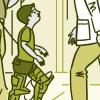
Bionic Movements
… the capability of the anatomy that’s missing now,” says Dr. Nick Langhals, who oversees NIH-supported prosthetic engineering research. This fast-moving research aims to improve people’s … are not as easy to learn how to use. To close the device, you contract the remaining muscles in your arm. An electrical sensor placed over those muscles detects the contraction and tells the … are now in development. If you’d like to find a clinical study to help test one, you can search for one in clinicaltrials.gov, a database of both NIH-supported and other studies around …

Radon Risk
… on it. You might not be able to see or smell radon, but it can still harm you—slowly, and in ways that you can’t detect. Radon is a colorless, odorless, radioactive gas. It comes from the … of being exposed accumulate over time so that it may take many years for disease to appear. NIH-funded scientists have been working to better understand the relationship between radon exposure and cancer risk. The good news is that many radon-related lung cancer deaths can be prevented. But testing is the only way …
NIH Office of Communications and Public Liaison
Health and Science Publications Branch
Building 31, Room 5B52
Bethesda, MD 20892-2094
Contact Us:
nihnewsinhealth@od.nih.gov
Phone: 301-451-8224
Share Our Materials: Reprint our articles and illustrations in your own publication. Our material is not copyrighted. Please acknowledge NIH News in Health as the source and send us a copy.
For more consumer health news and information, visit health.nih.gov.
For wellness toolkits, visit www.nih.gov/wellnesstoolkits.